THE PLACENTAL BARRIER

The placenta forms a barrier to the transfer of drugs between the mother and the fetus, but increasing lipid-solubility, decreasing maternal protein binding, decreasing molecular weight, increased materno-fetal concentration gradient and placental blood flow etc will increase the placental transfer of drugs

The relative distribution of the drug across the placenta is represented by Feto-Maternal (F/M) concentration ratio

Pethidine and diamorphine are both metabolised in the fetus to less lipid-soluble products like norpethidine and morphine respectively, which remain on the fetal side of the placenta. The elimination half-lives of these drugs are also longer in the fetus because of immature hepatic metabolism. This again prolongs its existence in the fetal side.

Lipid solubility of drugs like thiopentone sodium are high; so they cross the placenta easily, and can accumulate as the pH is lower in the fetus

Diazepam is metabolised to less lipid-soluble products. So it can have an F/ M ratio of 2 even one hour after maternal administration.

Local anaesthetic agents are weak bases which are largely UN-IONISED at physiological pH, and cross the placenta readily. Foetal ‘trapping’ occurs only in severe acidosis, when the molecules become IONIZED in the fetal side.

AMIDE LOCAL ANESTHETICS

FUROSEMIDE , THIAZIDES & NSAIDs : A FEW FACTS

Furosemide is a loop diuretic

It interferes with the concentrating capacity of the loop of Henle.

It is effective in patients with renal dysfunction, whereas the thiazides are NOT.

It potentiates the nephrotoxic effects of cephalosporins and the ototoxic effects of aminoglycosides.

NSAIDs inhibit renal prostaglandin, causing sodium to be retained, which reduces the diuresis caused by furosemide.

Furosemide is a venous and arteriolar dilator and thus reduces both preload and afterload in a time frame just before the period of onset of a significant diuresis.

DEXAMETHASONE AS AN ANTIEMETIC; THINGS TO BE KEPT IN MIND

Dexamethasone is an extremely effective antiemetic for children.

Usually a one-off dose of 4 mg is given.

This single dose has not been shown to produce significant adverse effects such as immunosuppression and poor wound healing.

Has rescue antiemetic properties

Most effective if given early on in the operation.

An awake patient may complain of an uncomfortable sensation of perineal warmth, when dexamethasone is given

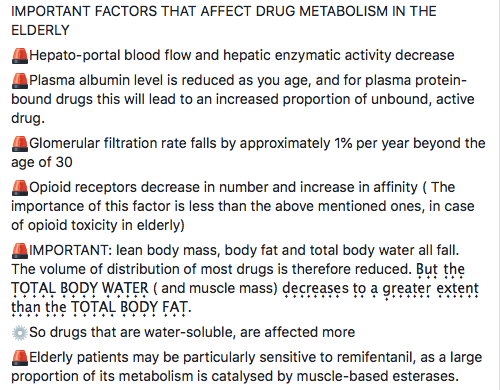
IMPORTANT FACTORS THAT AFFECT DRUG METABOLISM IN THE ELDERLY

Screen Shot 2018-09-02 at 5.16.40 PM

Antibiotics for infections by Elizabethkingia meningosepticum

Cotrimoxazole
Ciprofloxacin
Rifampin
Minocycline
Novobiocin
Vancomycin (problem is it’s high MIC)

ETOMIDATE BASED ANESTHESIA- FACTS

Etomidate is an imidazole derivative

It has higher incidence of PONV than other induction agents

It causes pain on injection

A potential for triggering porphyric crisis, has been described

The REVERSIBLE BLOCKADE of the adrenocortical enzymes 11β -hydroxylase and 17α-hydroxylase, reduces BOTH corticosteroid and mineralocorticoid synthesis and the effect LASTS FOR 3–6 hours after a bolus dose.

The effect of a bolus of etomidate is terminated by redistribution of drug to peripheral tissues

The standard dose for induction of anaesthesia is 0.3 mg/ kg

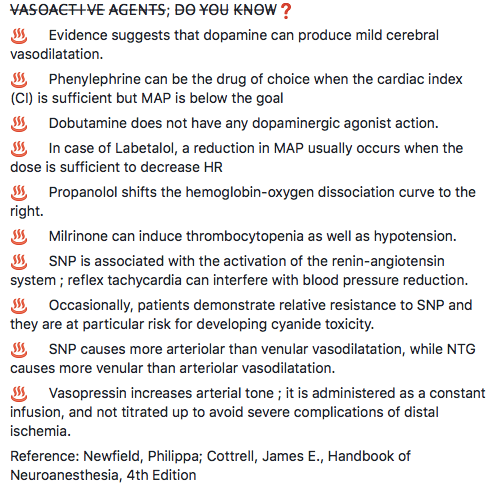
VASOACTIVE AGENTS; DO YOU KNOW?

Screen Shot 2018-09-02 at 4.36.50 PM

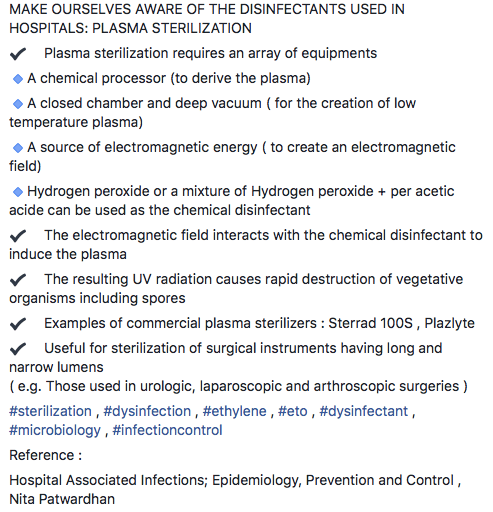
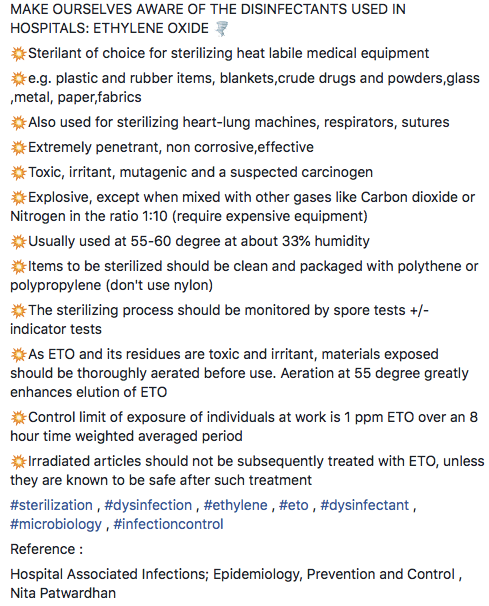
DISINFECTION: PLASMA STERILIZATION

Screen Shot 2018-09-02 at 4.25.13 PM