Anaphylactic Reactions on Muscle Relaxants

Neuromuscular blocking agents (NMBAs) represent the most frequently incriminated substances for allergic reactions among all drugs used in the perioperative period, ranging from 50 to 70% (1)

They are substances responsible for IgE-mediated anaphylaxis. Among NMBAs, the following substances have been incriminated, in decreasing order of importance: suxamethonium, vecuronium, atracurium, pancuronium, rocuronium, mivacurium and cisatracurium.(1)

Incidence of anaphylactic reactions are seen more with suxamethonium and rocuronium. (2) (3)

These reactions are more severe than with latex allergy

Seem to occur more frequently in women than in men.

If rapid-sequence induction is not mandatory, safer alternatives like cisatracurium can be used , in place of Rocuronium

Regarding suxamethonium, more frequently it causes histamine release from mast cells and basophils, resulting in flushing and urticaria (without anaphylactic reactions)(4)

Regarding atracurium , histamine release is observed in 40% of patients who receive doses over 0.5 mg/kg, resulting in transient hypotension and tachycardia; this can be prevented by injecting the drug slowly over 75 seconds, reducing the dose or prior treatment with 0.1 mg/kg chlorpheniramine and 2 mg/kg cimetidine i.v. (4)

Cisatracurium will not cause histamine release in clinical dose range. Cisatracurium had the lowest rate of cross-reactivity in patients who had previously suffered anaphylaxis to rocuronium or vecuronium.(4)

Mivacurium causes transient fall in b.p. due to histamine release with doses above 0.2 mg/kg(4)

The estimated sensitivity of skin tests for muscle relaxants is approximately 94 to 97 %. (1)

#anaphylaxis , #allergy , #anaesthesia , #MuscleRelaxants , #criticalcare , #nmba , #AnaesthesiaComplications , #pharmacology ,#rocuronium , #cisatracurium

Reference:

(1) www.worldallergy.org , Allergy to Anesthetic Agents, Mertes Paul Michel, Demoly Pascal, Stenger Rodolphe , Updated May 2013 ,Originally posted: October 2007, Reviewed by: Mario Sánchez-Borges
(2)A. Gullo(Editor) Anaesthesia, Pain, Intensive Care and Emergency – A.P.I.C.E.
(3) Proceedings of the 22 nd Postgraduate Course in Critical Care Medicine, Incidents Provoked Specifically by Certain Drugs Used in Anaesthesia M. K LIMEK , T.H. O TTENS ,F.G RÜNE
(4) Lee’s Synopsis of Anaesthesia,13/e, p:191-193
(5) Br J Anaesth. 2013 Jun;110(6):981-7. Anaphylaxis to neuromuscular blocking drugs: incidence and cross-reactivity in Western Australia from 2002 to 2011., Sadleir PH1, Clarke RC, Bunning DL, Platt PR.
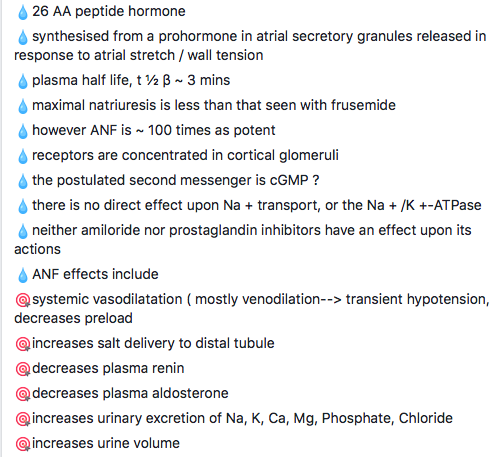
ATRIAL NATRIURETIC FACTOR

Screen Shot 2018-09-02 at 3.44.22 PM

TRAMADOL AND ONDANSETRON: THEY ARE NOT A GOOD PAIR ; WHY FORCING THEM TO LIVE TOGETHER

Tramadol- highlights

both opioid and non-opioid modes of action. .
(1)inhibition of noradrenaline re-uptake
(2)increased release and decreased re-uptake of serotonin in the spinal cord, and
(3)a weak effect on mu opioid receptors

The weak, opioid effect is mediated by an active metabolite, (+)-M1 (O-desmethyltramadol), formed via the genetically polymorphic P450 CYP2D6 iso-enzyme system. The biological activity of this system is variable, and individuals may be classified as extensive or poor metabolisers of tramadol.

Tramadol’s affinity for opioid receptors is about 6000 times weaker than morphine, but the (+)-M1 metabolite has an affinity about 200 times greater than tramadol. Poulsen et al. report much higher concentrations of the (+)-M1 metabolite and greater analgesic efficacy of tramadol in extensive metabolisers compared to poor metabolisers. Also noted was a reduction of nausea, vomiting and tiredness amongst poor metabolisers

Ondansetron competitively antagonises serotonin, subtype 3 (5-HT3) receptors in the CTZ and enteric neurones.

Peripheral 5-HT3 receptors are also involved in nociceptive pathways and ondansetron may alter 5-HT3 nociceptive responses at the level of dorsal horn neurones

Ondansetron can block sodium channels in a similar fashion to local anaesthetic agents, and exhibit agonist activity at mu opioid receptors, thus resulting in a peripheral anti-nociceptive effect.

Tramadol + Ondansetron

PONV due to Tramadol is often managed with, ondansetron

There is evidence that the concurrent use of these two drugs results in a mutual reduction of effect—tramadol becomes a less potent analgesic and ondansetron a less effective antiemetic.

But the effect of ondansetron on tramadol consumption diminished with time.

De Witte et al. found a significant (50%) increase in cumulative tramadol consumption during the first post-operative hour when patients were given ondansetron along with Tramadol.

Ondansetron is, in part, metabolised by the CYP2D6 iso-enzyme system—an iso-enzyme system responsible for formation of an active tramadol metabolite that has analgesic effect . Competition for this metabolic pathway may result in a reduction in formation of the (+)-M1 metabolite of tramadol and a consequent reduction in analgesic efficacy.

DO YOU KNOW? additional points++

There is animal and human evidence that both tramadol and ondansetron have local anaesthetic type properties.

Ondansetron was approximately fifteen times more potent than lignocaine and may well be a prototype molecule for the development of a new group of local anaesthetic agents.

These findings are further supported in a human clinical study by Memis et al. which showed that tramadol and ondansetron both significantly reduced the pain associated with the injection of the neuromuscular blocking drug, rocuronium.

Tropisetron and granisetron are able to reverse an aceaminophen-mediated analgesia completely.


References:

Anaesthesia. 2015 Feb;70(2):209-18. doi: 10.1111/anae.12948. Epub 2014 Dec 10.
The effect of ondansetron on the efficacy of postoperative tramadol: a systematic review and meta-analysis of a drug interaction.
Stevens AJ1, Woodman RJ, Owen H.

Ondansetron Inhibits the Analgesic Effects of Tramadol: A Possible 5-HT3 Spinal Receptor Involvement in Acute Pain in Humans
Arcioni, Roberto MD*,; della Rocca, Marco MD*,; Romanò, Sarah MD*,; Romano, Rocco MD†,; Pietropaoli, Paolo MD*, and; Gasparetto, Alessandro MD*

ScienceDirect Review
Aspects of tramadol and ondansetron interactions Bruce Hammonds, David A. Sidebotham, Brian J. Anderson

Ref: J.H. Ye, W.C. Mui, J. Ren, T.E. Hunt, W.H. Wu, V.K. Zbuzek Ondansetron exhibits the properties of a local anesthetic. Anesth. Analg., 85 (1997), pp. 1116–1121

Ref: Pickering G, Loriot MA, Libert F, et al. Analgesic effect of acetaminophen in humans: rst evidence of a central serotonergic mechanism. Clin Pharmacol Ther. 2006;79:371–8

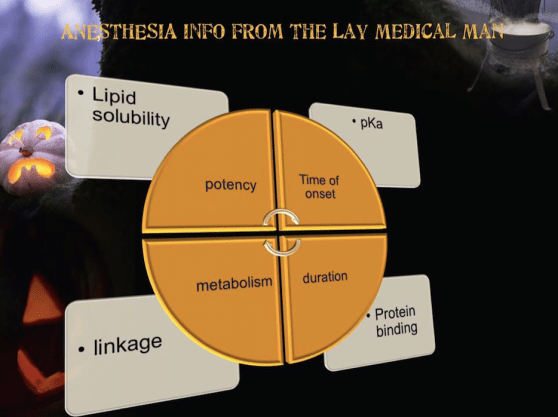
BASICS: POTENCY, DURATION AND ONSET OF ACTION OF LOCAL ANESTHETICS

POTENCY:

Is affected by several factors including:

Hydrogen ion balance
Fiber size, type, and myelination
Vasodilator/vasoconstrictor properties (affects rate of vascular uptake)
Frequency of nerve stimulation
pH (acidic environment will antagonize the block)
Electrolyte concentrations (hypokalemia and hypercalcemia antagonizes blockade)

Lipid solubility.

DURATION OF ACTION

Is associated with lipid solubility.
Highly lipid soluble local anesthetics have a longer duration of action due to decreased clearance by localized blood flow and increased protein binding.

ONSET OF ACTION

Local anesthetics are weak bases and contain a higher ratio of ionized medication compared to non- ionized.
Increasing the concentration of non-ionized local anesthetic will speed onset.
In general, local anesthetics with a pKa that approximates physiologic pH have a higher concentration of non- ionized base resulting in a faster onset.
On the other hand, a local anesthetic with a pKa that is different from physiologic pH will have more ionized medication which slows onset.
For example, the pKa for lidocaine is 7.8 and 8.1 for bupivacaine. Lidocaine is closer to physiologic pH than bupivacaine. Lidocaine has a greater concentration on non-ionized local anesthetic than bupivacaine which results in a faster onset.
Non-ionized and ionized portions of local anesthetic solution exert distinct actions.
Lipid soluble, non-ionized form of the local anesthetic penetrates the neural sheath and membrane.
In the cell, the non-ionized and ionized forms equilibrate.
The ionized form of the local anesthetic binds with the sodium channel. Once “bound” to the sodium channel, impulses are not propagated along the nerve.

Clinically, onset of action is not the same for all local anesthetics with the same pKa. This is due to the intrinsic ability of the local anesthetic to diffuse through connective tissue.

So in general, local anesthetics with a pKa closest to the physiological pH generally have a higher concentration of non-ionized molecules and a more rapid onset.

Two notable exceptions are chloroprocaine and benzocaine. Chloroprocaine has a high pKa and rapid onset. Benzocaine does not exist in an ionized form and exerts its effects by alternate mechanisms.

Screen Shot 2018-09-02 at 4.58.54 PM

XENON – THE STRANGER

Colorless, odourless, tasteless gas

Four times denser than air.

Density and viscosity are substantially higher than those of other inhalational anaesthetics.

Occurs in extremely low concentrations (0.0875 ppm) in the atmosphere, hence its name from the Greek ‘xenos’ meaning ‘stranger’.

Xenon has been used experimentally as an anaesthetic for more than 50 years

Recently there has been a renewed interest in xenon as a safe, effective and more environmentally friendly substitute for nitrous oxide (Sanders et al. 2003).

Manufactured by fractional distillation of liquefied air, currently at a cost of US $10 per litre (i.e. about 2,000 times the cost of producing N2O). This high cost is the major factor limiting its more widespread use, even when used in low-flow delivery systems.

Xenon has many of the properties of an ideal anaesthetic.

Its blood/gas partition coefficient (0.12) is lower than that of any other anaesthetic, giving rapid induction and emergence.

It is unlikely to be involved in any biochemical events in the body, and is not metabolised.

Xenon causes no significant changes in myocardial contractility, blood pressure or systemic vascular resistance, even in the presence of severe cardiac disease (Sanders et al. 2005).

The unique combination of analgesia, hypnosis, and lack of haemodynamic depression in one agent would make xenon a very attractive choice for patients with limited cardiovascular reserve

In contrast to other inhaled anaesthetic agents, xenon slows the respiratory rate and increases the tidal volume, thereby maintaining minute ventilation constant.

Airway pressure is increased during xenon anaesthesia, due to its higher density and viscosity rather than direct changes in airway resistance (Baumert et al 2002).

Because of its high cost xenon must be used in low-flow closed circuits. Crucial to this method of administration is accurate measurement of the concentration of xenon in the circuit. This measurement is generally difficult as xenon is diamagnetic and does not absorb infrared radiation (commonly used method to measure the concentrations of other agents), and its low reactivity precludes the use of specific fuel cell or electrode-type devices.

Xenon conducts heat better than other gases, and a technique based on thermal conductivity has proved to be effective (Luginbuhl et al 2002).

Because xenon is heavier than air, the speed of sound is slower in xenon than that in air, and this difference has been also been used to measure xenon concentration.

Because xenon is a normal constituent of the atmosphere, it does not add to atmospheric pollution when emitted from the anaesthesia circuit. This is in contrast to the other inhalational anaesthetics, which have ozone-depleting potential and pollute the atmosphere when released from the anaesthesia system (Marx et al. 2001).

On a molecular basis, N2O is 230 times more potent as a greenhouse gas than carbon dioxide. N2O released as a waste anaesthetic contributes roughly 0.1% of total global warming. The lifetime of N2O in the atmosphere is long—approximately 120 years.

The anaesthetic actions of xenon are thought to result primarily from noncompetitive inhibition of NMDA receptors (De Sousa et al. 2000), a property it shares with nitrous oxide.

In common with other NMDA receptor antagonists, xenon appears to have neuroprotective properties (Sanders et al. 2003).

Xenon is also an excellent analgesic, an action mediated by NMDA receptors (De Sousa et al. 2000).

Xenon also inhibits the plasma membrane Ca2+ pump, altering neuronal excitability and inhibiting the nociceptive responsiveness of spinal dorsal horn neurones.

#xenon ,#InhalationalAnaesthesia ,#GlobalWarming ,#Ozone , #OzoneDepletion ,#NobleGas ,#anaesthesia ,#ClinicalPharmacology,#pharmacology ,#research

(Reference : Jürgen Schüttler • Helmut Schwilden Modern Anesthetics ,Handbook of Experimental Pharmacology, vol 182)

Drugs that act as Respiratory stimulants/ depressants

Drugs that act as Respiratory stimulants

Acetazolamide
Aminophyllines
Doxapram
Progesterone
Salicylates

Drugs that act as Respiratory depressants

Alcohol
Anaesthetics
Anticholinergics
Antihistamines
Barbiturates
Benzodiazepines
Opioids

NATURALLY OCCURRING OPIOIDS

MNEMO>

P͎A͎P͎A͎ C͎a͎r͎e͎s͎ M͎O͎R͎e͎ T͎H͎a͎n͎ N͎A͎T͎U͎R͎E͎

PAPAVERINE CODEINE MORPHINE THEBAINE

Labetalol Pharmacology

Comes as 5 mg/mL ampoules

Blocks α, β1, and β2 adrenergic receptor sites.
Decreases heart rate and peripheral vascular resistance.

Ratio of alpha to beta blockade depends upon the route of administration (1:3 oral versus 1:7 IV)

Onset of action: 2‐5 minutes

Will not cause bronchoconstriction

Duration: 2‐4 hours

IV Bolus: 20 mg over at least 2 minutes as initial dose, may repeat with doses of 40-‐ 80 mg q10min; Do not exceed total dose of 300 mg

Infusion [ dilution 1 mg/mL] : starting 2 mg/min (2 mL/min) – 8 mg/min titrated to response. Do not exceed total dose of 300

As cumulative dose nears 300mg IV, duration of action extends to nearly 18 hours.

Ref: B Xu, F Charlton, A Makris, A Hennessy – Journal of hypertension, 2014

D for DANTROLENE

Dantrolene inhibits calcium release via RyR1 antagonism and impairs calcium-dependent muscle contraction.

This rapidly halts the increases in metabolism and secondarily results in a return to normal levels of catecholamines and potassium.

Dose is 2 mg/kg; repeat every 5 minutes until vital signs normalise, to a total dosage of 10 mg/kg if needed.

Dantrolene takes ~ 6 minutes to have any effect

The solution is prepared by mixing 20 mg of dantrolene with 3 g of mannitol in 60 ml of sterile water. Reconstitute each 20 mg vial with 60 ml sterile water. The powder for reconstitution contains mannitol and Sodium hydroxide. Use within 6 hours.

Since dantrolene is relatively insoluble, preparation is tedious and time consuming, and its preparation should not be the responsibility of the primary anesthesiologist involved in the patient’s management. (May occupy several nurses)

All patients who develop MH, require at least 24 hours of posttreatment management in a critical-care setting as there is chance of reappearance of symptoms ( known as recrudescence )

In the ICU, continue @1mg/kg q6h for 24 hours
May be given enterally if GIT function is normal (price ~ 1000 x less)

The actions of dantrolene include:

inhibition of release of Ca ++ from the SR, without affecting re-uptake
? antagonises the effects of Ca ++ at the actin/myosin – troponin/tropomyosin level
muscular weakness, which may potentiate NMJ blockade ~ 5-15 mg/kg produces significant muscular relaxation
there is no effect on NMJ transmission
up to 15 mg/kg there is no significant effect on the CVS
up to 30 mg/kg there is no significant effect on respiration

#dantrolene , #MalignantHyperthermia, #mh ,#anaesthesia