
- The Rayleigh refractometer utilises the refractive index of a gas to calculate its concentration.
- Thermal conductivity is used in katharometers. In these devices, the cooling of a wire causes a change in resistance proportional to gas concentration.
- Solubility is employed in devices such as rubber strips when an increase in length accompanies gas absorption.
- Light emission features in the Raman light scattering measurement device.
- Both infrared and ultraviolet absorption are used in gas concentration measurement.
Tag Archives: Physics for anesthesiologist
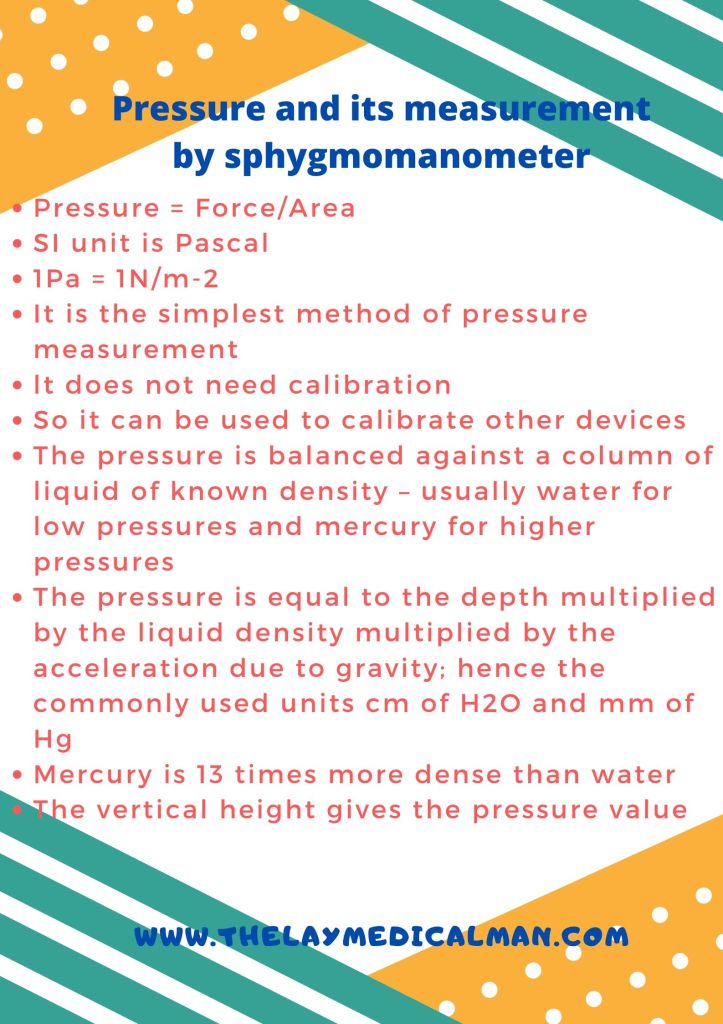
Pressure and it’s measurement by manometer
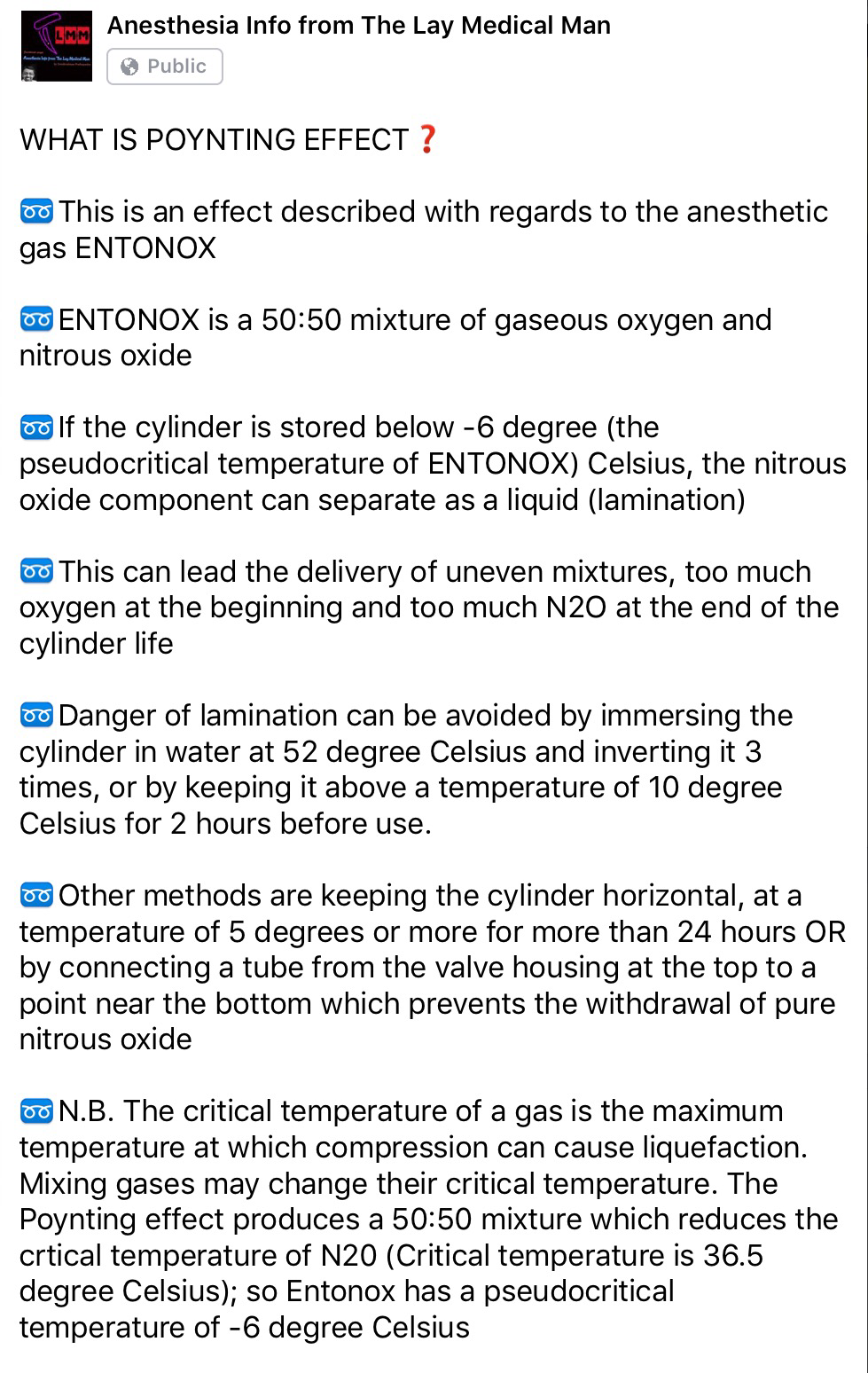
WHAT IS POYNTING EFFECT ❓
♈️#PhysicsForAnesthesiologist : Beer-Lambert Law
☢️The #pulseoximeter works based on Beer-Lambert law, which relates the attenuation of light to the properties of the material through which the light is travelling.
☢️It helps us in the calculation of the absorbance of a solution.
☢️According to the law, the absorbance of a solution depends on:
🖍The concentration of that solution, i.e. the more molecules of a light-absorbing compound there are in the sample, the more light will be absorbed.
🖍The path-length of light travelling through the solution, i.e. the longer the length of the sample container, the more light will be absorbed because the light will come into contact with more molecules.
🖍A = εlc where
🔻A is absorbance of light
🔻ε is the molar extinction coefficient(l mol–1 cm–1). It compensates for variance in concentration and the path-length, to allow comparison between solutions.
🔻l is the length of solution that the light passes through.
🔻c is the concentration of the compound in solution, expressed in mol L–1
☢️In the pulse oximeter, the concentration and molar extinction coefficient are constant. The only variable becomes the path length, which alters as arterial blood expands the vessels in a pulsatile fashion.
#Anesthesia, #PhysicsAndMedicine , #MedicalExams
 The Lay Medical Man