IMPEDENCE AND RESISTANCE

  • Impedance and resistance are terms used to describe the opposition to electrical current flow.
  • Resistance is used to describe opposition to flow in DC circuits, whereas impedance is used for AC circuits.
  • Unlike direct currents, alternating currents exhibit reactance (capacitive and inductive) because they have frequency and are phase associated.
  • In AC circuits, impedance (Z) consists of a real part (ohmic resistance) and an imaginary part (reactance of an inductor or capacitor). It is measured in ohms, and is the total opposition to current flow
  • Capacitors placed in DC circuits create an increasing resistance to current flow. This is because the charge at the negative plate of the capacitor accumulates, until maximum capacitance is reached and current flow ceases.
  • Capacitors in AC circuits allow current to flow, as the alternating direction of current flow prohibits a significant build up of charge on one of the plates.
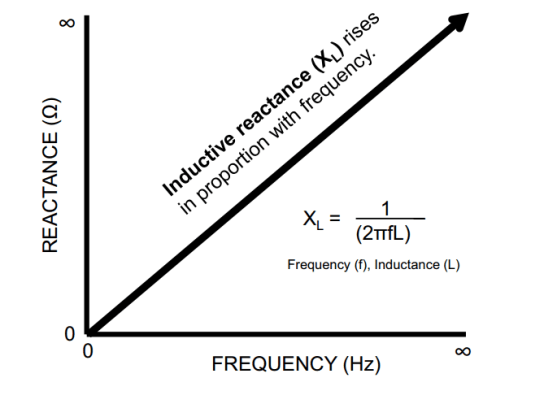
  • Reactance is the resistance to AC that a capacitor or inductor exhibits and is inversely proportional to frequency.
  • This principle is used in filters to screen out DC currents and low frequency AC.
  • Inductors are coils of conducting wire wound around a ferrous or air core.
  • An increasing current flowing through an inductor generates a magnetic field around it. This magnetic field in turn creates an electromagnetic force, which opposes the current flow, known as back-emf. This effect is known as inductance, and its SI unit is the henry (H).
  • In a circuit where the rate of current change is 1 A/s, an inductance of one henry would generate one volt across the inductor.
  • Henry (H) = Voltage (V) × Time (s) / Amperes (A)
  • When the power is switched off, collapse of the magnetic field induces flow of electrons in the inductor and circuit, prolonging the flow of current for a short period.
  • Inductors placed in DC circuits will initially encounter transient resistance while the magnetic field is established. Once a steady state is reached, the reactance is negligible.
  • Conversely, inductors in AC circuits encounter increasing reactance proportional to the frequency. This is because the creation and subsequent reversal of magnetic field development produces a constant back-emf resisting current flow. Therefore, high-frequency AC will cause a high reactance in the inductor.
  • Inductors are used to filter out high-frequency alternating currents, or to smooth out the effect of power surges in monitoring equipment
  • Screen Shot 2018-08-14 at 11.25.12 AM.png


LASERS

Screen Shot 2018-08-13 at 3.12.27 PM

    LASER is an acronym for Light Amplification by Stimulated Emission of Radiation.
    A laser comprises a laser tube constructed from an active lasing medium that can be a gas, solid or a liquid, with a mirror at each end of the tube
    Lasers produce an intense parallel beam of coherent monochromatic light (one specific wavelength of light) by the stimulated emission of photons from excited atoms
    Injecting energy from an external source (pumping) causes the lasing medium to become excited. Gas lasers are excited using an electric current applied to either end of the laser tube, while solid state and liquid lasers are excited using a high intensity light source. The mirrors cause photons to bounce back and forth within the laser medium, triggering further emission of photons by the process of stimulated emission. One mirror is partially reflective which allows some photons to escape in the form of the laser beam. The beam is then focused as required
    Electrons of atoms within a lasing medium normally reside in a stable low-energy level known as the ground state. Pumping excites electrons, raising them to higher energy levels. Because higher energy states are unstable in comparison to the ground state, there is a tendency for electrons to release excess energy and return to lower energy levels. This process is known as decay.
    As an electron decays from the metastable to ground state, it emits a photon of energy. If this photon strikes an excited electron in the metastable state, it incites it to emit another photon, which will have the same wavelength, waveform and direction as the incident photon. They are said to be in phase and coherent.
    Red and near-infrared lasers have the deepest penetration.
    Carbon dioxide lasers emit infrared light and have limited penetration, but are precise and can be used for cutting and vaporising.
    Argon lasers predominantly produce blue–green light at 488 and 514 nm, and are commonly used in ophthalmology.
    Neodymium-doped yttrium aluminium garnet (Nd:YAG) lasers have the deepest penetration and can cut and coagulate. They are used to resect gastrointestinal and bronchial tumours, and gynaecological lesions.
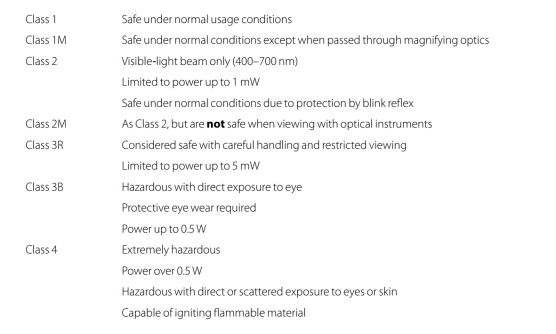
    LASERs are classified 1–4, 1 being least dangerous.
    Most medical lasers are class 3B and class 4. They pose a high risk to staff and patients.
    Lasers can ignite flammable material such as endotracheal tubes and surgical drapes. They can also cause airway and body cavity fires in the presence of high concentrations of flammable gases.
    The risk of airway fires can be reduced by using the lowest inspired oxygen concentration possible that achieves suitable oxygen saturations. In addition, using laser-safe endotracheal tubes with the cuffs filled with saline and dye helps to further reduce the risk of fires. The water in the cuff acts as a heat sink to reduce the likelihood of perforating and igniting the cuff with the laser. The dye provides a visual indication in the event of cuff perforation.

WHEATSTONE BRIDGE & STRAIN GAUGES

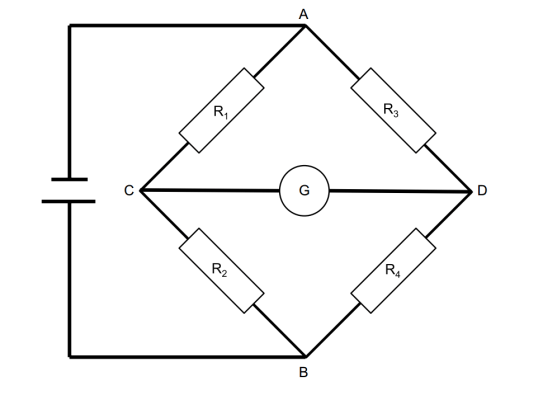
  • The Wheatstone bridge is an electrical circuit that uses an arrangement of four resistors to measure an unknown electrical resistance.
  • The typical Wheatstone bridge contains a power source, a galvanometer (G), two resistors of known resistance (R1, R2), a variable resistor (R4) and an unknown resistance, which is the one to be measured (R3). The connection across CD containing the galvanometer is known as the bridge.
  • This circuit is sensitive to changes in the ratio of resistances across pairs of resistors.
  • When the voltages at C and D are equal, the ratios of resistances equal each other (R1/R2 = R3/R4), no current will flow through the galvanometer and the bridge is balanced.
  • By altering the resistance of the variable resistor R4 until the ratio of resistance across the limb ADB equals that of ACB, the bridge can be balanced, and no current flows across CD. By knowing the resistance required at R4 to
    balance the bridge, R3 can be calculated by using the equation R1/R2 = R3/R4
  • A strain gauge is either a foil arrangement or a conductive metallic strip. In the arterial transducer, strain gauges are mounted on a diaphragm.
  • The arterial pulsation is transmitted via a continuous column of fluid to the diaphragm, which causes it to stretch. The attached strain gauge will also stretch and its resistance increases. Conversely, when the diaphragm relaxes the resistance in the strain gauge falls. R3 is the strain gauge attached to the diaphragm, and the variable resistor R4 has been adjusted to match the resistance of R3 in the resting position, so that the bridge is balanced. Movement of the diaphragm would alter the resistance of R3, which unbalances the bridge and results a potential difference across CD. The resulting potential difference is quite small, so it is common to use a differential amplifier in place of the galvanometer to increase the sensitivity of the circuit in detecting the signal.
  • Screen Shot 2018-08-13 at 2.06.10 PM

Methods to measure the concentration of a gas or vapour

  • The Rayleigh refractometer utilises the refractive index of a gas to calculate its concentration.
  • Thermal conductivity is used in katharometers. In these devices, the cooling of a wire causes a change in resistance proportional to gas concentration.
  • Solubility is employed in devices such as rubber strips when an increase in length accompanies gas absorption.
  • Light emission features in the Raman light scattering measurement device.
  • Both infrared and ultraviolet absorption are used in gas concentration measurement.

ECG – EEG – EMG Biological Signals

  • The movement of ions across cell membranes during the depolarisation and repolarisation of myocytes and neurones generates electric potentials.
  • Silver metal electrodes covered with a layer of silver chloride gel within an adhesive sponge pad can be used to measure these potentials at the skin.
  • Ion movement near the electrode–skin interface induces movement of chloride ions within the gel layer. The ion concentration gradient promotes electron production at the electrode.
  • A lead wire and voltmeter attached to the electrode allows measurement of the potential relative to a reference point. The reference point is usually a second skin electrode.
  • Signals are then amplified, processed and displayed.
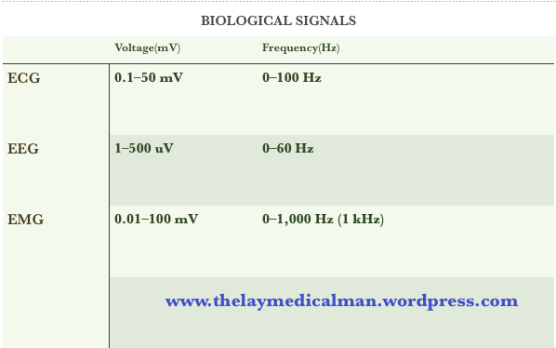
  • Skeletal and cardiac muscles have higher amplitudes than cerebral neurones. This is because the amplitude of biological potentials is proportional to the number of simultaneously depolarising cells.
  • The frequency of potentials is related to the fluctuating ion activity across cell membranes.
  • Skeletal myocytes which undergo tetany have high frequencies of
    up to 1 kHz.
  • Conversely, cardiac myocytes have lower frequencies due to their refractory periods Screen Shot 2018-07-20 at 5.37.08 PM

HUMIDITY AND ANESTHESIA

  • Absolute humidity is the mass of water vapour present in a given volume of gas at
    defined temperature and pressure (expressed as g of H2O/m3 of gas).
  • Relative humidity is the mass of water vapour present in a given volume of gas,
    expressed as a percentage of the mass of water vapour required to saturate the same volume of gas at identical temperature and pressure.
  • The amount of water vapour required to saturate a known volume of gas increases with temperature, i.e. a gas saturated at 20°C contains less water than the same volume, saturated at 37°C
  • Relative humidity (RH), can be calculated from the ratio of the mass of water vapour present (mP), to the mass required for satruation (mS) as
    RH = mP/mS
  • If droplets are present, supersaturation has occurred and relative humidity exceeds 100%.
  • From the gas laws, mass of a gas in a mixture is proportional to the partial pressure it exerts, thus: RH = water vapour pressure/ saturated water vapour pressure
  • Instruments used to measure humidity are called hygrometers. Examples include:
    Regnault’s hygrometer
    Hair hygrometer
    Wet and dry bulb thermometers
    Humidity transducers

ELECTRICAL EQUIPMENT SAFETY

  1. Class 1 equipment is fully earthed.
  2. Class 2 equipment is double insulated.
  3. Class 3 is low voltage (24V).

PRESSURE & IT’S MEASUREMENT BY MANOMETER ⏲

💎Pressure = Force/Area

💎SI unit is Pascal

💎1Pa = 1N/m-2

💎It is the simplest method of pressure measurement

💎lt does not need calibration

💎So it can be used to calibrate other devices

💎The pressure is balanced against a column of liquid of known density – usually water for low pressures and mercury for higher pressures

💎The pressure is equal to the depth multiplied by the liquid density multiplied by the acceleration due to gravity; hence the commonly used units cm of H2O and mm of Hg

💎Mercury is 13 times more dense than water

💎The vertical height gives the pressure value

NEBULIZERS

  • Aerosols are small particles of liquids or solids suspended in a carrying gas
  • Medical aerosols can be produced by a nebulizer
  • The therapeutic efficacy of the aerosol is dependent on the liquid or solid’s ability to remain in suspension and the depth reached by the aerosol on inhalation, and is dependent on its stability. These are both determined by the particle size.
  • For liquid medication to enter the alveoli the droplets must be smaller than the diameter of the terminal bronchioles and fall within the size range of 0.005 µm to 50 µm in diameter.
  • For droplet sizes below 5 µm, gravity exerts a negligible effect.
  • Particles or droplets in the range 5 to 10 µm tend to deposit in the upper airways, with material below 5 µm penetrating further into the lungs.
  • Below 3 µm, the droplets enter the alveoli and become therapeutically beneficial.
  • Droplets below 1 µm are ideal; but if significantly smaller than this, the particles will be exhaled without having a therapeutic effect.
  • The temperature for an aerosol generated by a nebulizer must not exceed 37°C and the process must not alter the structure of the medication being carried.
  • This is the essential difference between vaporizers that generate a vapour and nebulizers that produce liquid droplets.
  • Jet or gas driven nebulizer (atomizers)
  • A high flow of gas is driven over a capillary tube that is immersed into the fluid to be nebulized. The high pressure air driven through the small orifice, generates negative pressure as a result of the Venturi effect. These nebulizers are simple and low cost, but small variations in gas flow rate can result in inconsistent delivery of aerosol to the patient.
  • Ultrasound driven nebulizer
  • The ultrasound nebulizer incorporates a ceramic piezoelectric transducer that changes electrical energy into mechanical energy (pressure oscillations). The transducer sits at the bottom of the chamber and vibrates at a frequency of 1.5 MHz. The vibrations are transmitted through the water. The diaphragm is in contact with the solution to be nebulized and violently shakes the solution into particles. At low frequencies, larger particles are produced, but at higher frequencies, a fine mist is generated
  • Ultrasonic nebulizers tend to produce a more consistent particle size than jet nebulizers and, as a result, produce a much greater deposition into the lungs.
  • But long-term use of ultrasonic nebulization might inadvertently affect surface tension stability in the alveoli

HUMIDIFIERS

Heat and moisture exchange filter (HMEF)

  • HMEF is inexpensive, disposable, passive and efficient enough to provide adequate humidification of dry gases for up to 24 hours.
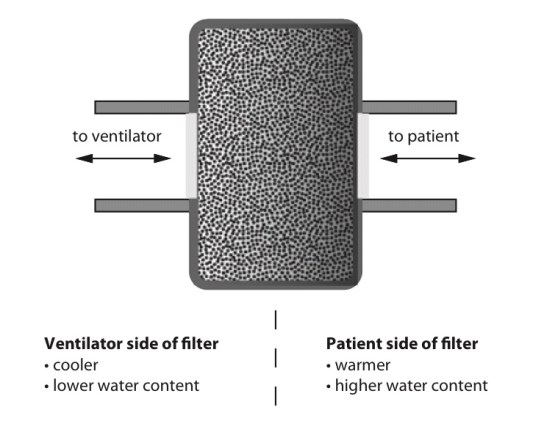
  • It creates a sealed unit, near the patient end of the breathing system, containing a hygroscopic material such as calcium chloride or silica gel.
  • As the warm and moist gas from the patient reaches the HMEF, the moisture from the gas condenses onto the hygroscopic surface, simultaneously heating the element via the latent heat of condensation
  • With the next inspiration of dry cold gas over the moist element this process is reversed, warming and humidifying the gas the patient receives.
  • This process is about 80% efficient
  • The addition of a 0.2 mm filter renders the interface impermeable to bacteria and viruses
  • The disadvantages are that because it is a passive device, the HMEF is not 100% efficient and the patient will therefore lose heat and moisture over time, although this is negligible. Also, it adds dead space ranging from 8 mL in a paediatric HMEF to 100 mL in an adult, while the additional resistance can be up to 2.0 cm H2O ( may not create issues if respiratory function is not compromised significantly).
  • The hygroscopic material and filter can act as a dam to secretions, greatly increasing the work of breathing. This is easily remedied by vigilance and replacement.

Water bath humidifiers

  • Active water baths can achieve 100% efficiency and can also be used to heat the patient
  • But they are bulky and complex and better suited for patients requiring longer-term ventilation or oxygen therapy.
  • Passive water baths simply consist of a chamber of water through which the inspired gas is bubbled to achieve full saturation.
  • The disadvantage is that the temperature of the water limits the maximum achievable humidity.
  • Cooling of the water bath happens secondary to the latent heat of vaporization as the water is vaporized. This is remedied by an active system incorporating a heating element and thermostat.
  • The system is designed to keep the water bath at a specific temperature (40–60°C). This increases the temperature of the gas mixture and therefore the achievable humidity. This system is capable of delivering fully saturated gas at 37°C at high flow rates which represents a significant advantage over the HMEF.
  • All water baths need to include a water trap in their design, because the cooling of the gas as it moves away from the hot bath to the patient will result in condensation which can accumulate and could result in wet drowning. This risk may be minimized by heating the tubing and preventing condensation forming.
  • Water baths at around 40°C minimize the risk of scalding the patient’s airways with overly heated gas, but run the risk of creating an ideal environment for microbial growth.
  • By heating the water to 60°C the risk of bacterial contamination is reduced but the gas temperature must now be very carefully monitored.
  • A thermistor on a feedback loop to the water bath’s thermostat can adjust the temperature of the water, and therefore inspired gas, to ensure that the patient does not suffer from airway scalding.
  • The ideal size of water droplets for humidification is 5–10 microns. Smaller droplets will descend to the alveoli and larger ones will condense in the trachea.
  • Scalding is a risk associated with water bath types when the temperature within exceeds 37C.
  • Nebulisers are more efficient than water bath types of humidifiers. The Bernoulli effect describes the drop in pressure occurring at a jet, where velocity is greatest, which is employed to draw up water from a reservoir. This effect is used in spinning disc and gas driven humidifiers among others.