
- Competitive alpha blocker
- Used in hypertensive emergencies like in pheochromocytoma; also in CRPS
- MOA: 3 times more specific for alpha 1 receptors than alpha 2. Doesn’t bind covalently to receptors; hence reversible. Also has beta agonistic and anti-serotoninergic activity
- Comes as pale yellow solution 10 mg/mL; dose is 1–5 mg titrated to effect
- CVS: Vasodilation and reduce BP, improve coronary artery perfusion, reduce pulmonary artery pressures. Alpha 2 blockade enhances noradrenaline release causing increase in HR and CO
- RESPIRATORY SYSTEM: Increase FEV1, increase secretions, prevents bronchospasm caused by histamine release
- Other Side Effects: Nasal congestion, Hypoglycemia (Causes insulin secretion)
PHENOXYBENZAMINE
- Phenoxybenzamine is a haloalkylamine. Used as a vasodilator in hypertensive emergencies like in pheochromacytoma; also used in the management of CRPS. Used in the management of intraarterial injection of thiopentone too.
- It is a non-selective alpha blocker. It binds covalently to the receptors. So it behaves like a competitive irreversible antagonist.New receptors must be synthesised to overcome drug effect. Blockade of alpha 2 receptors increases the amount of noradrenaline released: produces tachycardia. Partial agonist at 5-HT2 receptors
- Available as capsules of 10 mg and solution: 50 mg/mL for iv use. Oral dose is 10–60 mg per day in divided doses and IV: 10–40 mg over 1 hour. Effects may lasts for 3–4 days
- CVS: Vasodilation and fall in BP, but tachycardia increase CO
- CNS: Sedation. Rapid infusion can cause seizures
Cricoarytenoid arthritis: an ominous entity for the anesthesiologist
- Rheumatoid arthritis is the most common cause of this condition
- Can also may be associated with bacterial infections, mumps, diphtheria, tuberculosis and ankylosing spondylitis,systemic lupus erythematosus, gout, progressive systemic sclerosis
- The cricoarytenoid joint has a synovial lining and bursa. Its mobility is vital for speech, respiration, and protection from aspiration.
- Effusion, pannus formation, joint erosion, and ankylosis may compromise the joint’s functions.
- Its involvement may be unsuspected or mistaken for asthma until intubation or after extubation and may necessitate a surgical airway.
- Dysphonia, dyspnea, or stridor should raise suspicion of this possibility.
- Complete airway obstruction is a well described but an uncommon complication
- Laryngoscopy may reveal a rough and thick mucosa with narrowing of the vocal chink.
- Airway obstruction occurs most commonly in patients with long-standing rheumatoid arthritis with polyarticular and systemic involvement
- But laryngeal stridor has been described as the sole manifestation of this disease too!
- Always anticipate this as a cause for postoperative stridor in such patients.

HYPONATRAEMIA CORRECTION 2020 UPDATES
A little piece of advice to the First year Post Graduate Student in Anesthesiology
Welcome dear doctor. Thanks for joining our world!

These are my suggestions ⬇️ (Opinions may vary) for you at such a crucial time point in your career. Remember first impression is the best impression. Make your first impression about the specialty better.
1. Knowing this specialty consists of learning the principles of almost all surgical specialties, learning core pathophysiology, most of the pharmacology, learning about relevant equipments and machines, learning to give importance to the primary reason which forced the patient to come to you, learning to sync with your senior and junior colleagues, teachers, technicians and surgeons, learning from experience (mistakes) and learning to send back the patient happily, first out of the theatre and then out of the ICU. Doing procedures alone will not make you a good anesthesiologist; you should gain expertise in the overall management. Also read what you see.
2. On weekends take google scholar and type the name of any anesthesia drugs or equipments or a procedure ( e.g. spinal anesthesia) or a subspeciality ( e.g. obstetric, urology) name; you will get titles and abstracts of lots of articles. Pick one interesting title and search it in Sci Hub. You will get the full article. If it’s a review article, learn the content; if it’s a study, look at their methodology, think how you can design a similar study, what they found out, discussion part etc. This habit (especially reading studies) will impart a wisdom in selecting your thesis topic. Do it frequently and understand how people are doing research. For texts: see below
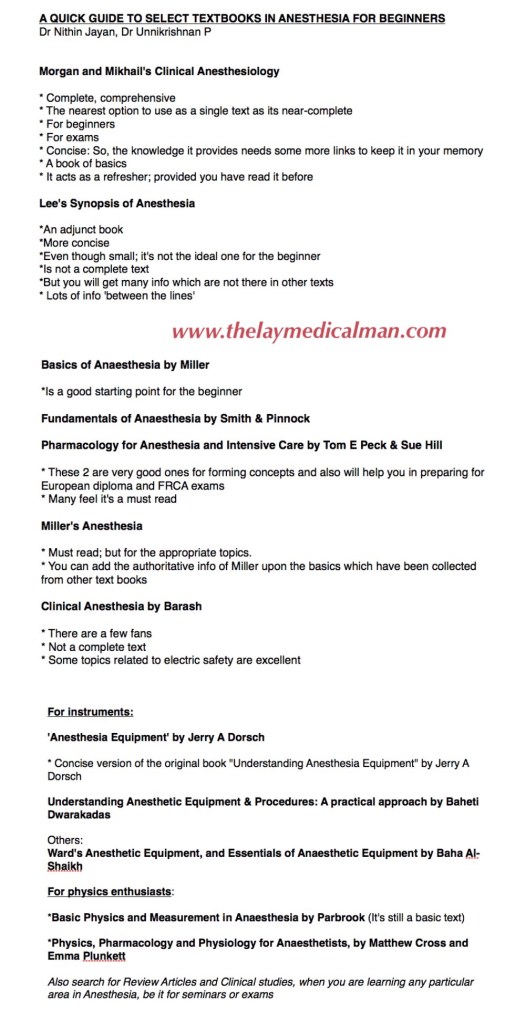
3. Read Critical Care, Pain, Neuroanaesthesia and Cardiac Anesthesia articles all through your course and test whether you have any interest in any of these. This will help you later in deciding on further sub specialisation, if needed.
4. Plan to write EDAIC exam after passing out your MD. Please read Fundamentals of Anesthesia by Colin Smith and Tim Pinnock, for this purpose, if time allows. This is one ‘intervention’ which can change your future in Anesthesiology.
5. Always make a habit of reading what you have done each day; even if it’s for 10 minutes, it’s okay. But read everyday. I will discount further. 5 minutes is enough, but don’t break this habit!!!
6. Morgan (full)+ selected chapters from Miller will be a good choice in gaining knowledge and performing well in exams.
7. Don’t try to read from Chapter 1 of any book; read the area whichever you like/ want.
8. It’s definitely a very good specialty. Learn to deal properly with your colleagues, teachers, surgeons and most importantly to the patient. This will passively decide where you reach finally.
9. Keep folders (either physical/ on your computer) with folder names ( e.g. Urology Anesthesia , Airway , Central Neuraxial Blockade etc) and keep everything in an orderly fashion so that you can access the same article which you have read in first year, before final exam also. Add related articles to the same folder.
DELIRIUM IN ICU PPT
Sevoflurane vs Desflurane

COVID TIPS FOR THE ANAESTHETIST

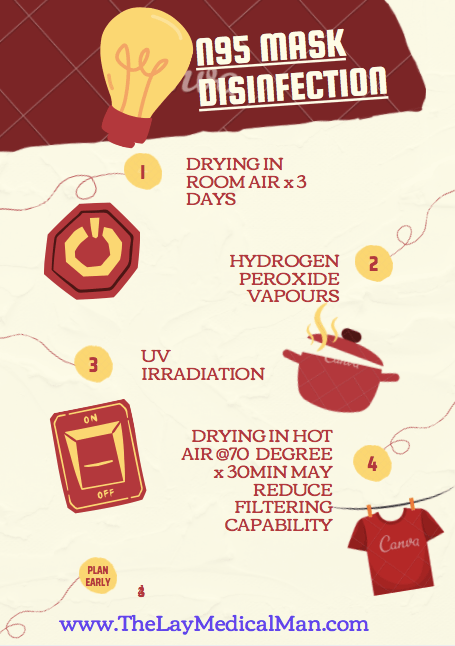
N95 MASK DISINFECTION.
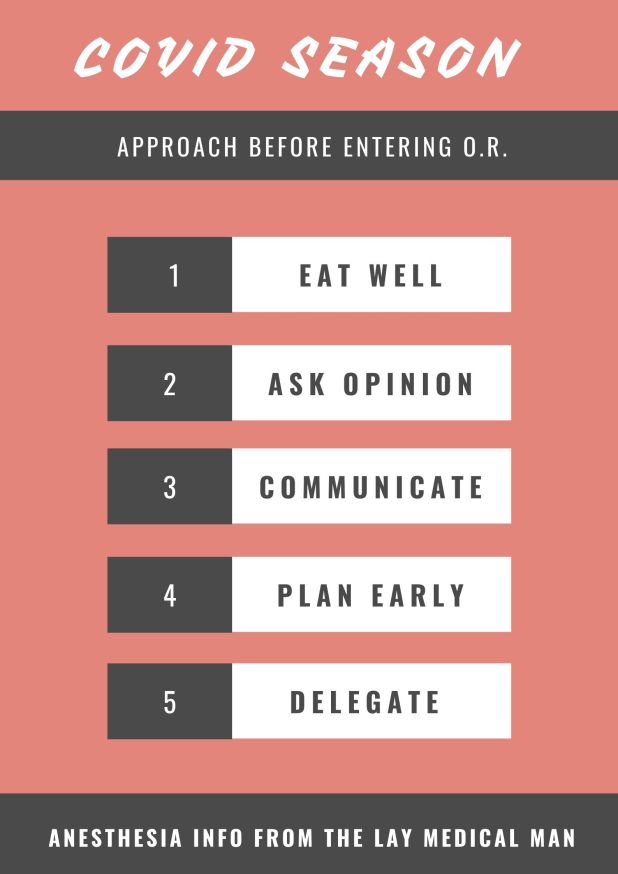
HEY ANESTHESIOLOGIST!
1.TAKE CARE OF YOURSELF
2.ASK OPINION TO SOMEONE WHO ALREADY HAD AN EXPERIENCE
3.GOOD COMMUNICATION BETWEEN ANESTHESIA & SURGERY TEAMS
4.PLAN SUFFICIENTLY EARLY AND DISCUSS INSIDE THE TEAM
5.ASSIGN DUTIES CLEARLY TO EACH MEMBER


