VIVA SCENE: ADH- MECHANISM OF ACTION; ANALOGUES ; EFFECTS

MECHANISM OF ACTION:

  • Anti Diuretic Hormone (ADH) stimulates V2 receptors on collecting ducts, which increases adenylate cyclase activity. This causes fusion of pre-formed water channels on the apical membrane resulting in increased permeability of the collecting ducts to water.

ADH is secreted in response to:

  • Hyperosmolarity: detected by osmoreceptors in the hypothalamus, outside the blood–brain barrier. Osmoreceptors then stimulate thirst

    Volume depletion (ECF) detected by low-pressure baroreceptors in great veins, atria and pulmonary vessels, and high-pressure baroreceptors in the carotid sinus and aortic arch

  • Angiotensin II (AGII)

  • Other: pain, exercise, stress, emotion, nausea and vomiting, standing, nicotine, morphine, barbiturates, carbamazepine.

EFFECTS:

It regulates Total Body Water (TBW).

The specific renal effects of ADH on water balance include:

  • Increased water permeability in cortical collecting tubule (V2 receptors)
  • Increased water and urea permeability in medullary collecting tubule
  • Increased retention of water
  • Reduced urine volume

OTHER EFFECTS

  • It stimulates thirst
  • Release of factor VIII by the endothelium
  • Platelet aggregation and degranulation
  • Arteriolar vasoconstriction
  • Glycogenolysis in the liver
  • Brain neurotransmitter
  • Secretion of ACTH from the anterior pituitary gland.
ADH Receptors

VASOPRESSIN RECEPTOR AGONISTS

Arginine-Vasopressin: A V receptor agonist is a potent alternative to vasoconstrictors in the treatment of fluid and catecholamine-refractory septic shock

Terlipressin is a selective V1 receptor agonist and may be more potent than arginine-vasopressin in restoring catecholamine refractory septic shock

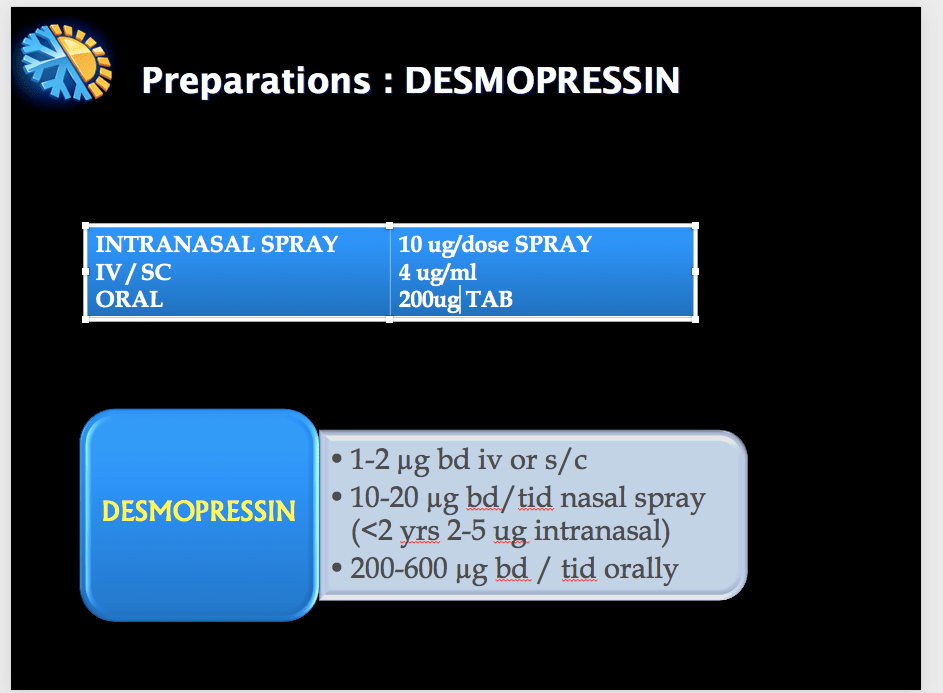
Desmopressin (1-deamino-8-D-arginine vasopressin) is a synthetic vasopressin analog, that acts as an agonist at V1B and V2 receptors. Exhibits antidiuretic and haemostatic properties. So also used in the management of some forms of hemophilia and von Willebrand’s disease

Vasopressin dosing
Desmopressin dosing

ANTAGONISTS

Vaptans act by inhibiting vasopressin’s action on all the 3 types of receptors. e.g. Conivaptan (unselective), Tolvaptan (V2 selective). Used in the treatment of euvolemic (eg SIADH) and hypervolemic (CHF) hyponatremias, nehrogenic DI, cirrhosis, PCKD etc
VIVA SCENE: DESFLURANE

  • Desflurane is a fluorinated methyl ethyl ether (MW = 168)
  • Its an irritant gas, so cannot be used for induction
  • MAC is 6.6% ( for an infant the MAC raises to 9.4%)
  • Boiling point is low at 22.8 degrees compared to other agents
  • SVP at 20 degrees is very high at 89.2 compared to other agents
  • Extremely volatile; so needs an electronic Tec 6 vaporizer
  • Has a low OGPC of 29 = potency is low
  • Has a high BGPC of 0.42 = rapid onset and offset
  • Only 0.02% of desflurane will get metabolised (to trifluoroacetic acid)
  • Its effect on the CVS is modest: reduce SVR only above 2.2 MAC and effect on contractility is less than other agents. It increases HR like isoflurane
  • Like other agents it reduces TV and increases RR
  • Like other agents, it has the potential to increase cerebral blood flow above 1 MAC
  • With dry sodalime, it has the potential to react and produce carbon monoxide

VIVA SCENE: PAIN: Most important points summarised

DEFINITION:

  • Pain is ‘an unpleasant sensory and emotional experience associated with actual or potential tissue damage’. (IASP: International Association for the Study of Pain)

CLASSIFICATION:

According to chronicity

  • Acute: Recent onset pain with identifiable cause
  • Chronic: Pain persisting beyond the time of injury or healing without definable cause

According to nature

Nociceptive pain: Pain occurring due to stimulation of peripheral sensory nerve fibres (nociceptors) that respond to potentially harmful stimuli; further divided into

  • Superficial and Deep somatic pain: Relatively well localized pain due to activation of peripheral nociceptors.
  • Visceral pain (organs, viscera) – Diffuse pain that may be difficult to localize or referred to a superficial structure which is usually distant to the source of the pain

Neuropathic pain: Pain that occurs due to a primary lesion or dysfunction in the nervous system itself.

THE GATE CONTROL THEORY OF PAIN:

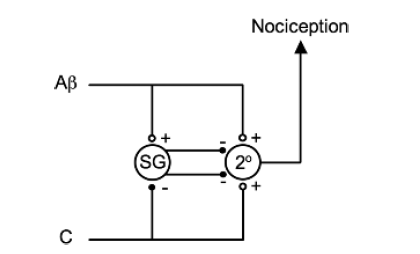
  • Melzack and Wall theorized that the transmission of a peripheral painful stimulus to the CNS occurs via a gate at spinal cord level. This gate comprises an inhibitory interneurone in the substantia gelatinosa that may be either stimulated or inhibited by different afferent inputs.
  • Screen Shot 2019-09-06 at 1.02.03 pm
  • The Aβ fibres are examples of afferents that stimulate inhibitory interneurones (in the substantia gelatinosa (SG)) and, therefore, prevent nociceptive transmission to the CNS. The C fibres are examples of afferents that inhibit inhibitory interneurones and, therefore, enhance nociceptive transmission. Note that both types of fibres stimulate the second-order neurone (2°) directly but it is the interneurone that modifies the transmission.

  • Laminae 2 & 3 are called the substantia gelatinosa and is the site of the ‘gate control theory’ of pain.

PAIN PATHWAY

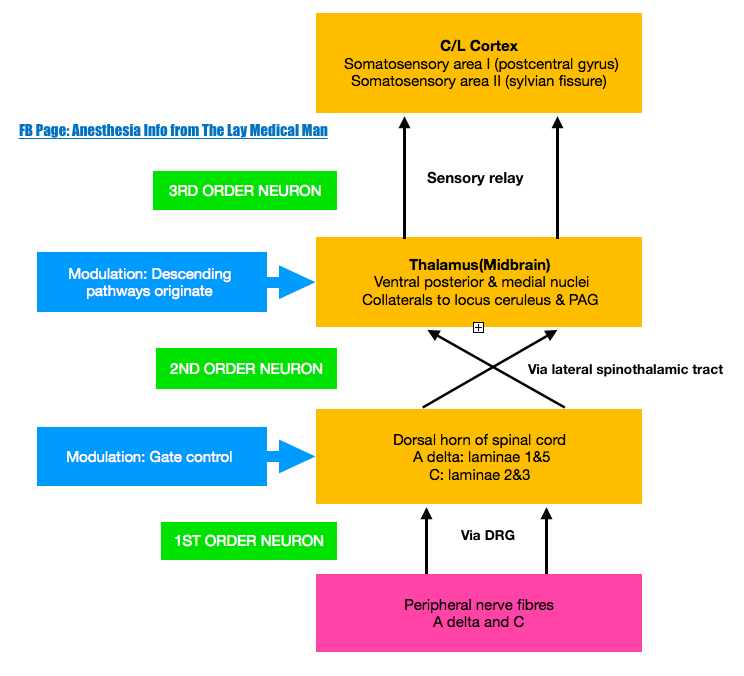
  • There are three levels of neuronal involvement and the signals may be modulated at two points during their course to the cerebral cortex. Descending inhibitory pathways arise in the midbrain and pass to the dorsal horn. Multiple different neurotransmitters are involved in the pathway and include GABA,NMDA, noradrenaline and opioids.

  • Noxious stimuli –>tissue damage –>mediators–> nociceptors stimulation–> action potential –> propagated along afferent nerve fibres C & Aδ –> dorsal horn of the spinal cord –> Synaptic transmission with secondary interneurones occurs in Rexed’s laminae –> secondary interneurones decussate and travel in the anterolateral spinothalamic tracts –> through the brainstem –>to the thalamus –> tertiary afferents project to the somatosensory cortex.

  • Some spinal ascending fibres transmit impulses to the reticular-activating system, and to higher centres involved with affect, emotion and memory.

  • Descending fibres from cortex, thalamus and brainstem exert an inhibitory influence on pain transmission in the dorsal horn

  • An immediate polysynaptic withdrawal reflex occurs at the level of the spinal cord as some interneurones connect to motor neurones at many levels. This is a protective reflex.

  • Screen Shot 2019-09-06 at 1.42.15 pm

DESCENDING INHIBITORY PATHWAYS

  • Periaqueductal grey (PAG) in the midbrain receives projections from the thalamus, hypothalamus, amygdala and cortex, and delivers projections to the nucleus raphe magnus (NRM) in the medulla, whose fibres synapse in the substantia gelatinosa of the dorsal horn. Its transmitters include endorphins and enkephalins (MOP opioid receptors) and serotonin (5HT1 and 5HT3 receptors).

  • Locus caeruleus (LC) is an important brainstem nucleus projecting descending inhibitory pathways to the dorsal horn via noradrenaline (α-adrenergic receptors).

VIVA SCENE: PARACETAMOL Vs MORPHINE CENTRAL MOA

PARACETAMOL:

Central action via COX 3 inhibition which is associated with decreased brain PGE2 levels. It also modulates endogenous cannabinoid system

MORPHINE:

Morphine work by stimulating presynaptic Gi-protein-coupled MOP and KOP opioid receptors. Binding of the ligand causes the following events:

> Closure of voltage-gated Ca2+ channels

> Decreased cAMP production

> Stimulation of K+ efflux from the cell

> Hyperpolarisation of the cell membrane.

> This leads to decreased excitability of the cell and therefore decreased neurotransmitter release and pain transmission

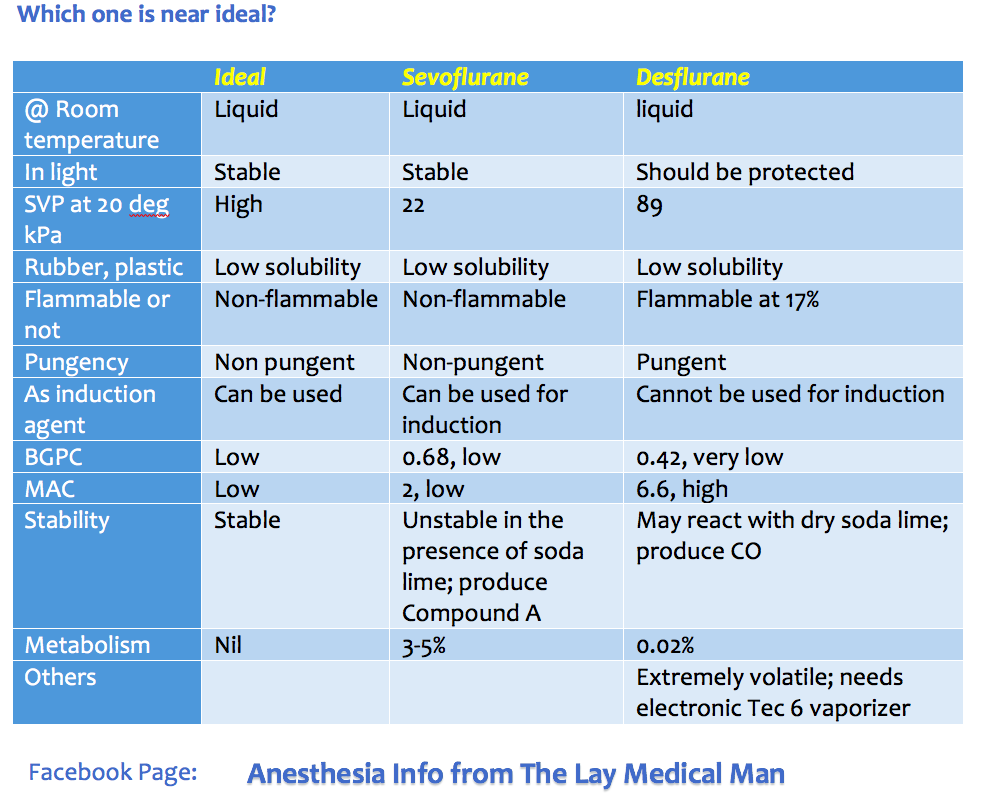
VIVA SCENE: Ideal Inhalational Agent

Screen Shot 2019-09-05 at 7.20.43 pm

VIVA SCENE: THROMBOELASTOGRAPHY (TEG) AND OTHER QUESTIONS

TEG is a relatively new modality for monitoring coagulation which is very useful during management of trauma and also in the perioperative scenario..

BASIS:

  • The 2 main components of the TEG machine are a cup and a pin. Whole blood is mixed with the activating agent kaolin as well as calcium. The cup then oscillates around the pin slowly, at a rate of 6 times per minute, to mimic natural blood flow in vivo and activate the clotting cascade. As the clot forms, the torque between the cup and pin is transduced and measured, creating a curve. As the clot breaks down and torque decreases, the tracing converges to represent this. 
  • The different parameters of the curve are then measured to assess current coagulation status.
  • Of the 4 types of TEG assays available, the most common is the rapid TEG. The use of an activator in rapid TEG standardizes the TEG test and speeds up the rate at which clotting takes place, thus making results available more quickly.

INTERPRETATION

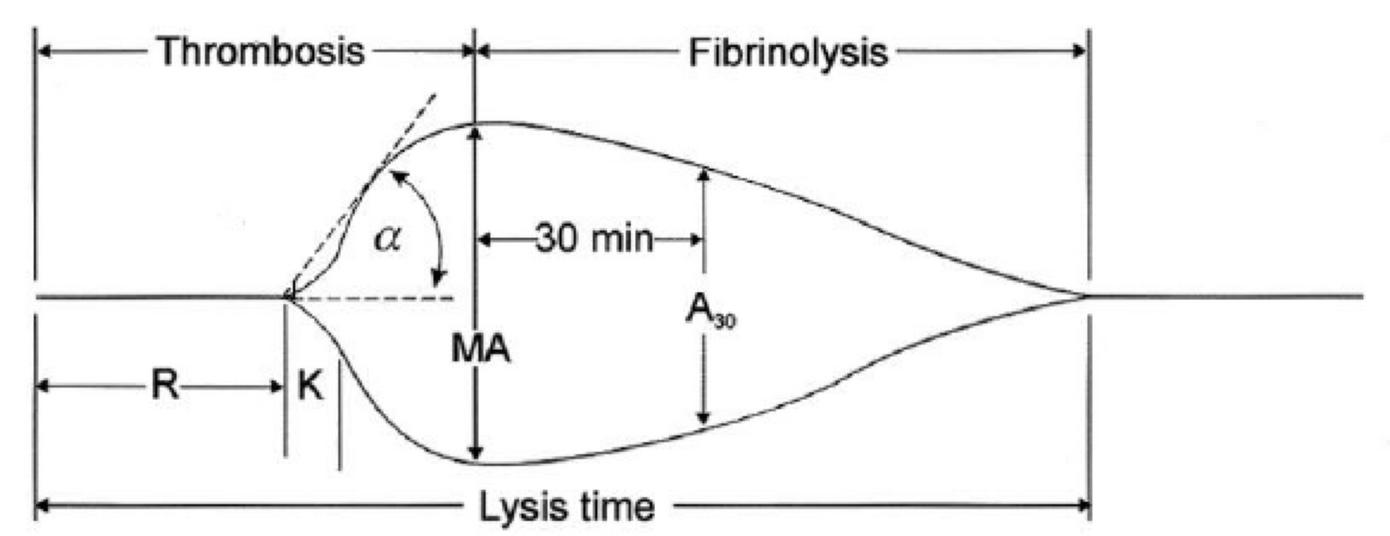
Screen Shot 2019-09-04 at 3.20.39 pm

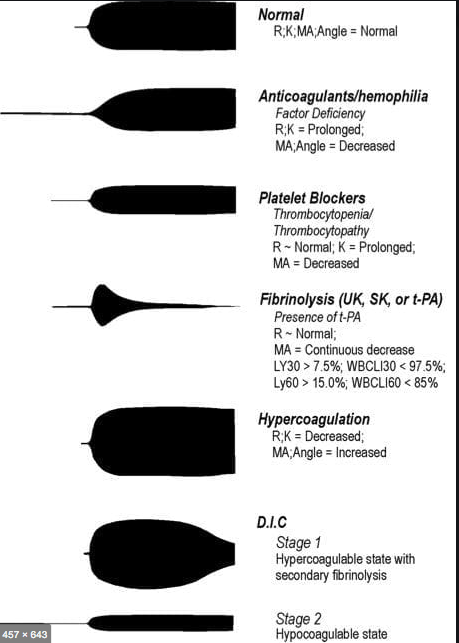
Screen Shot 2019-09-04 at 3.04.41 pm

  • R(sec): The first measurement of note is the reaction time (R time). This is the time interval from the start of the test to the initial detection of the clot. Normal R values range between 7.5 and 15 minutes. A prolonged R time may indicate hemodilution or clotting factor deficiencies. The treatment for prolonged R time is to administer FFP as it contains all factors of the coagulation cascade, without further coagulant hemodilution A shortening of R time (< 3 minutes) occurs in hypercoagulable states. Examples would be patients with early disseminated intravascular coagulation (DIC) or septicemia. In these situations, free thrombin is released into the circulating blood, triggering the clotting mechanisms but the patient later begins to bleed because of exhaustion of clotting factors.

  • K (sec) and Angle α (°): The clot strength is measured by these 2 variables in TEG. The K value measures the interval between the R time and the time when the clot reaches 20 mm. Normal K values range between 3 and 6 minutes. Prolongation of the K value with normal platelet count  indicates inadequate amounts of fibrinogen to form fibrin. The treatment for prolonged K value is therefore to administer fibrinogen/cryoprecipitate. The α angle measures a line tangent to the slope of the curve during clot formation.The alpha angle represents the thrombin burst and conversion of fibrinogen to fibrin. Normal α value is between 45° and 55°. A longer K value causes a shallow or more acute angle (<45°), while a shorter K value causes a steeper α angle (>45 °). An angle α <45° suggests a less vigorous association of fibrin with platelets. In this case, treatment begins much higher on the coagulation cascade, with the replacement of both fibrinogen and factor VIII. Thus, these patients can be treated with the administration of cryoprecipitate. Shortening of the K-value indicates a very quick formation of clot, potentially due to hypercoagulability or inappropriate consumption of coagulation factors. A shortened K value also corresponds to a steeper α (>45°). The treatment for shortened K and steeper α is anticoagulation therapy

  • MA (mm): Maximum amplitude is a measurement of maximum clot strength and provides information on both fibrinogen and platelet function. As the clot develops and increases in tensile strength due to platelet activation and binding to fibrin, the tracing increases it’s MA or appears to widen. Normal values are between 50–60 mm. 80% of the MA is derived from platelet function whereas the remaining 20% is derived from fibrin. A low MA value is indicative of low clot strength, which can be caused by decreased fibrinogen levels, low platelet counts, or decreased platelet function. (i) Paired with a prolongation of K value, this could be a sign of the need for cryoprecipitate. (ii) Administration of platelets may be avoided when a low platelet count is combined with a normal MA value (=platelet function is normal) (iii) Treatment with platelets may be indicated for patients with a low MA value (=low platelet function) and normal platelet count. (iv) High MA will occur in the setting of hyperactivity of platelets, and MA above 75 mm indicates a prothrombotic state. In this case, treating with an anticoagulant would be helpful
  • Shear Elastic Modulus Strength, G value or G: is a measure of clot strength or clot firmness, and is calculated based on the amplitude value (A) until the maximum amplitude (MA) is reached. It is the single most important value of the entire assay because it represents the overall function or effectiveness of the clot. Normal G values are between 5.3 and 12.4 dynes/cm2. A G value >10 dynes/cm2 indicates increased risk of thrombosis. Treatment for high G is accomplished by the use of platelet inhibitors such as Clopidogrel or Aspirin. Aspirin is usually not preferred because it inhibits platelet adherence rather than platelet aggregation. A G <5 dynes/cm2 places a patient at increased risk of hemorrhage
  • As time progresses during the TEG assay, the tracing will remain at maximal amplitude for a period of time, after which clot lysis begins. Normally, lysis continues for a period of up to 15 minutes. A computerized algorithm automatically estimates the percentage of lysis occurring over time. This is called the Estimated Percentage of Lysis or EPL. After 30 minutes, EPL becomes EPL30 or succinctly LY30 (i.e. percentage of lysis at 30 minutes). Both the EPL and LY30 are measurements of excessive fibrinolysis since they measure the percentage decrease in amplitude after MA. An EPL between 7.5 and 15%, when accompanied by a very high G, reflects a hyperfibrinolytic and hypercoagulable state typical of patients with early DIC. A very high EPL or LY30 (>20%) may indicate the need for antifibrinolytic therapy, such as the use of transexamic acid or aminocaproic acid. LY30 is also useful for patients undergoing thrombolytic drug therapy. This can be observed by rapid curve convergence.

Ref: Thromboelastography: Clinical Application, Interpretation, and Transfusion Management, Shawn Collins et al AANA Journal Course, 2016

HOW DO WE TEST CLOTTING?

  • By doing tests like aPTT, PT & INR, Platelet Count, ACT, Bleeding Time, fibrinogen and factor levels, TEG etc
  • The aPTT and INR use different reagents to measure the time to form a clot in vitro after platelet-poor plasma from blood collected in a calcium chelating tube, is recalcified
  • The aPTT is prolonged with the deficiency of factors of the intrinsic pathway: Fs 8,9,11,12. Also the factors involved in the common pathway (Fs 1,2,10)e.g. Heparin therapy, DIC, liver disease
  • The INR is prolonged especially with deficiency of F 7; but also with deficiency of Fs 1,2,5,10 e.g.  warfarin therapy, vitamin K deficiency, DIC, liver disease
  • N.B Warfarin inhibits the gamma carboxylation of vitamin K dependent factors 2,7,9,10
  • BLEEDING TIME :Duke’s method: Sterilize the finger tip using rectified spirit and allow to dry. Make a sufficiently deep prick using a sterile lancet, so that blood comes out freely without squeezing. Note the time (start the stop-watch) when bleeding starts. Mop the blood by touching the finger tip with a filter paper. This is repeated every 15 seconds, each time using a fresh portion of the filter paper, till bleeding stops. Note the time (stop the stop-watch). Normal value is upto 4 minutes. 
  • CLOTTING TIME: Capillary tube method: (Wright’s method). Under sterile precautions make a sufficiently deep prick in the finger tip. Note the time when bleeding starts (start the stop watch). Touch the blood drop at the finger tip using one end of the capillary tube kept tilted downwards. The tube gets easily filled by capillary action. After about two minutes start snapping off small lengths of the tube, at intervals of 15 seconds, each time noting whether the fibrin thread is formed between the snapped ends. Note the time (stop the stop watch) when the fibrin thread is first seen. Clotting time is the interval between the moment when bleeding starts and the moment when the fibrin thread is first seen.

    Normal value is 3 to 10 minutes.

  • Bleeding time depends on the integrity of platelets and vessel walls, whereas clotting time depends on the availability of coagulation factors

VIVA SCENE: CARBON MONOXIDE (CO) POISONING

AETIOLOGY: Carbon monoxide is produced by incomplete combustion and is found in car exhaust, faulty heaters, fires and in industrial settings. Carboxyhaemoglobin (COHb) concentrations in cigarette smokers range as high as 10%.

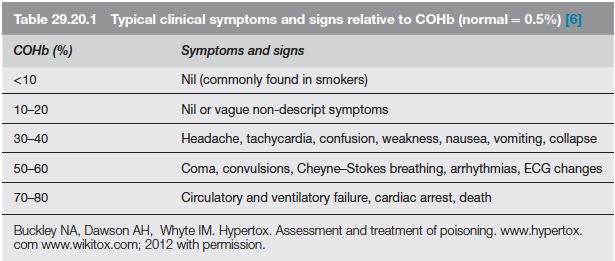
MECHANISM: Binds to Hb with 210 times affinity than O2: so reduce the O2 carrying capacity of blood. Also disrupts oxidative metabolism, binds to myoglobin and cytochrome oxidases, causes lipid peroxidation. Final result is tissue hypoxia. Severity depends on the duration of exposure, CO levels and patients pre-event health status: pre-existing cerebral disease, cardiac failure, hypovolemia and anemia increase toxicity

DIFFERENTIAL DIAGNOSIS: Cyanide poisoning ( suspected when CNS effects are out of proportion with COHb concentrations and if there is a marked lactic acidosis)

Screen Shot 2019-09-04 at 11.31.29 am

EVALUATION & MANAGEMENT:

  • ABC approach
  • Secure the airway; if GCS<8, consider intubation
  • Stabilize respiration:  consider mechanical ventilation or CPAP
  • Get intravenous access
  • Send samples for estimation of Hb(?anemia), electrolytes (dyselectrolytemias worsen the cardiac toxicity), COHb levels (to confirm diagnosis; useless in prognosis), blood sugar, ABG and cardiac enzymes. Take an ECG.
  • Metabolic acidosis due to lactate give a clue to the extend of ischemia. Net effect of metabolic acidosis may be beneficial on O2 delivery; but treated if pH<7
  • Patient discouraged from activity
  • 100% O2 reduces the half life of COHb from 4 hours (in ambient air) to 40 minutes. 4 to 6 h of 100% normobaric oxygen will remove over 90% of the carbon monoxide. Oxygen toxicity is unlikely with less than 24 h treatment
  • When immediately available, hyperbaric oxygen (HBO) should be considered with serious CO poisoning. Oxygen at 2–3 atmospheres will further reduce the half-life of COHb to about 20 min but, more importantly, it causes very rapid reversal of tissue hypoxia due to oxygenation of tissue from oxygen dissolved in the plasma. Some clinicians implement it based on the presence of any of the following: history of loss of consciousness, abnormal neuropsychiatric testing or neurological signs, pregnancy. COMPLICATIONS OF HBO: decompression sickness, rupture of tympanic membranes, damaged sinuses, oxygen toxicity

  • CO PRODUCTION WITH SODALIME USE: Occurs when inhalational agents with CHF2 moiety such as desflurane, enflurane, and isoflurane are used with desiccated soda lime granules that was left unused for a long time. Can be significant in smokers especially when very low flows are used. Factors increasing the production of CO include° Type of inhaled anaesthetic agent (magnitude of CO production from greatest to least is desflurane > enflurane > isoflurane > sevoflurane)° High absorbent dryness ° Type of absorbent (at a given water content, baralyme produces more CO than soda lime)° Increased temperature° Higher anaesthetic concentration

VIVA SCENE: C-SPINE X-RAY

WHETHER TO DO C SPINE IMAGING IN TBI; CRITERIAS:

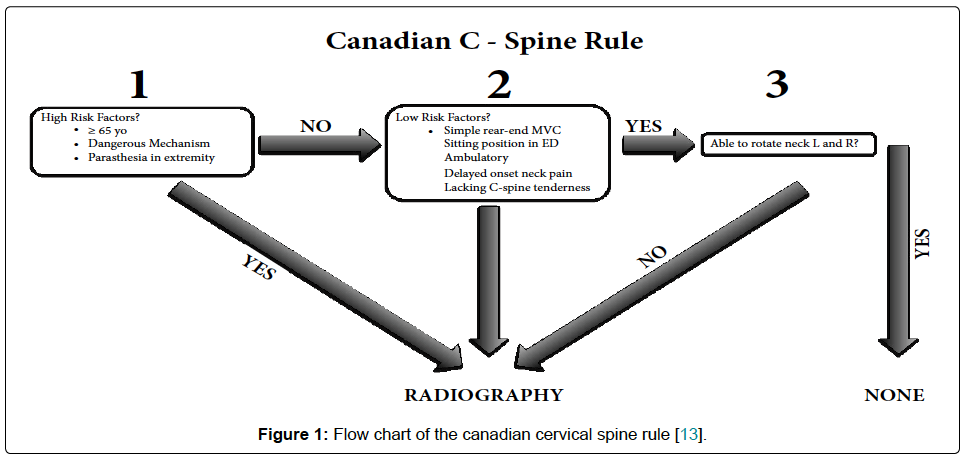
1. Screen Shot 2019-08-11 at 9.23.39 pm

2. Under the NEXUS guidelines, when an acute blunt force injury is present, a cervical spine is deemed to not need radiological imaging if all the following criteria are met:

  • There is no posterior midline cervical tenderness
  • There is no evidence of intoxication
  • The patient is alert and oriented to person, place, time, and event
  • There is no focal neurological deficit (see focal neurological signs)
  • There are no painful distracting injuries (e.g., long bone fracture)

Screen Shot 2019-08-26 at 11.12.53 am

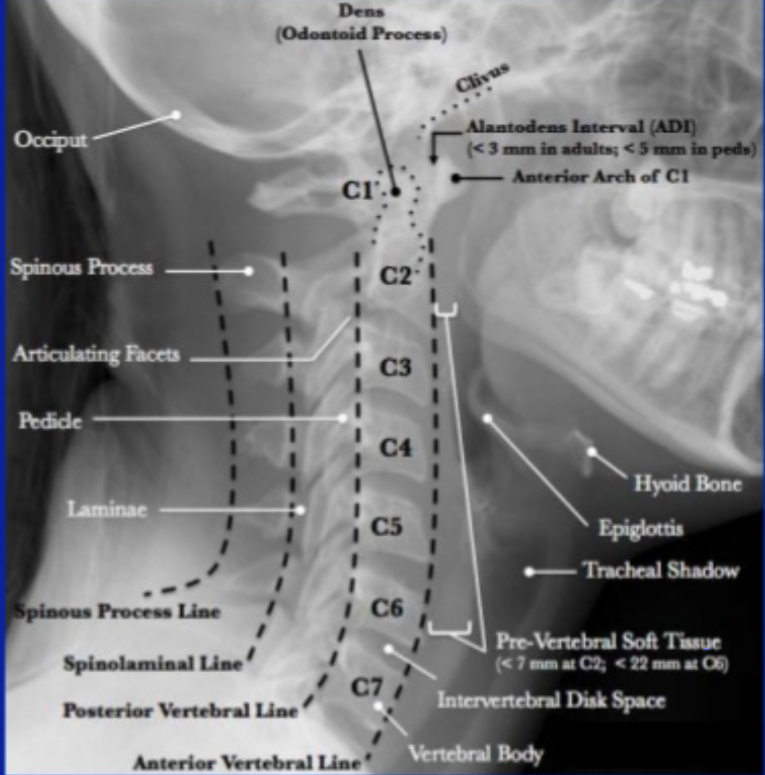
Lateral C-Spine Radiograph. (AABCDs)

A—Adequacy: An adequate film should include all seven cervical vertebrae and C7/T1 junction with optimum density so that the soft tissue shadow is visible clearly.

A—Alignment

a. Atlanto occipital alignment: The anterior and posterior margins of the foramen magnum should line up with the dens and the C1 spinolaminar line.

b. Vertebral alignment

Look for the following four lines (any incongruity= should be considered as evidence of ligamentous injury or occult fracture)

1. Anterior vertebral line—joining the anterior margin of vertebral bodies

2. Posterior vertebral line—joining the posterior margin of vertebral bodies

3. Spinolaminar line—joining the posterior margin of spinal canal

4. Spinous process/ Interspinous line—joining the tips of the spinous processes

B Bony Landmark: vertebral bodies, pedicles, laminae, and the facet joints are inspected

C Cartilagenous space: Predental space or the Atlanto-Dental Interval (ADI): which is the distance from dens to the body of C1. ADI should be < 3 mm in adults and < 5 mm in children. An increase in ADI depicts a fracture of the odontoid process or disruption of the transverse ligament

D—Disc space

Disc spaces should be roughly equal in height and symmetrical.

Loss of disc height can happen in degenerative diseases.

S—soft tissue

Prevertebral soft tissue space thickness can help in the diagnosis of retropharyngeal haemorrhage, which can be secondary to vertebral fractures. Maximum allowable distances :

Nasopharyngeal space (C1): 10 mm

Retropharyngeal space (C2–C4): 5–7 mm

Retrotracheal space (C5–C7): 14 mm in children and 22 mm in adults

VIVA SCENE IMAGING: CHEST X-RAY (CXR)

  • Helpful MNEMONICS: ‘PRIP ABCDEFGHI’. Also in inspiratory films the level of the diaphragm is at the level of ribs 5/6 anteriorly and 8/10 posteriorly. (AR6PR10). 
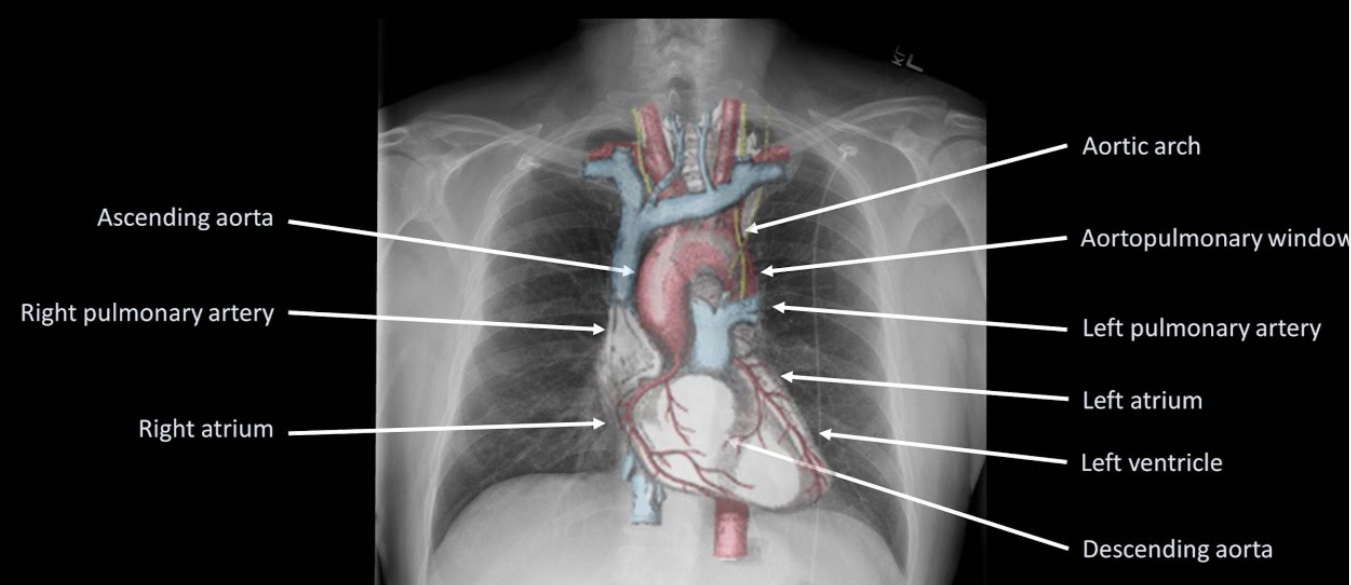
  • Right heart border is formed predominantly by the right atrium along with the lower part of SVC, whilst the left border is formed by the aortic arch, pulmonary artery, left atrium, and ventricle. The right and left ventricle forms the inferior border. The right diaphragm is normally higher than the left due to the liver.
  • Areas where pathology is commonly missed: Apices (including behind the 1st rib and clavicle)—small pneumothoraces and masses. Hila—masses and lymph nodes; left hilum is 1–2 cm higher than right. Behind the heart—left lower lobar collapse and hiatus hernia. Below the diaphragm—free gas. Soft tissues—breast shadow or absence (look for lung and bone metastasis)
  • This is CXR of Mr Roy (Patient identity) done on 14/08/2019 (date of study)
  • Its an AP film (Projection)
  • Non rotated (Rotation)
  • Expiratory film (Inspiratory/Expiratory)
  • Adequately penetrated (Penetrated)
  • Trachea is central, no foreign bodies or other abnormalities (A– Airway)
  • On both sides, the bones and soft tissues appear normal; ribs, sternum, scapula, clavicle, spine, and humerus has no deposits or fractures (B-Bones and soft tissues)
  • The cardiac silhoutte is normal (C-Cardiac silhoutte)
  • There is no free air under the diaphragm. Bilateral costo- and cardio-phrenic angles are clear (D– Diaphragm and angles)
  • No effusions. Pleura is not visible (E-Effusion)
  • Both sides, the lung fields appear normal (F-Fields = lung fields)
  • Gastric bubble visible at left upper abdomen (G=Gastric bubble)
  • The hila and the mediastenum appears to be normal and not displaced. The CT ratio is less than 50% (H-Hila and mediastenum)
  • Endotracheal tube tip is seen 5 cms above the carina or T4/T5 interspace. NG tube passed down midline, past level of diaphragm, and deviates to left with tip seen in stomach. ECG leads and electrodes are noted (I=Insertions, Interventions: tubes and lines, chest drains, pacemakers, and metallic valves and artefacts)
Screen Shot 2019-08-25 at 5.10.08 pm
  • If an intrathoracic opacity is in anatomical contact with the heart border, then the opacity will obscure that border. If an intrathoracic opacity is in the posterior pleural cavity so not in direct anatomical contact with the heart border, this causes an overlap but not an obliteration of that border (Silhoutte sign)
  • When the alveoli no longer contain air and opacify, the air-filled bronchi passing through the alveoli may be visible as branching linear lucencies. (Air bronchogram)
  • Linear opacities measuring 1–6 cm extending from periphery to the hila caused by distension of anastomotic channels between peripheral and central lymphatics.(Kerley A lines)
  • Short horizontal lines, due to oedema of the interlobular septae, situated perpendicularly to the pleural surface at the lung base (Kerley B lines)
  • Reticular opacities at the lung base (Kerley C lines)
  • The mediastinal masses can be identified on the PA views but lateral films and/or CT scans are required to confirm further diagnosis
  • Anterior mediastenum: Anterior to trachea, Middle mediastenum: Anterior to heart, Posterior mediastenum: Posterior to heart
  • ANTERIOR MEDIASTENAL MASS: (4 T’s) Thymic tumour -Teratoma- Thyroid –  Terrible lymph nodes (LN) Ascending aortic aneurysm, MIDDLE MEDIASTENAL MASS (BAL) Bronchogenic cyst – Arch aneurysm- LNs, POSTERIOR MEDIASTENAL MASS: as expected it can be from Spine/Neurogenic; also hiatus hernia
  • Hilar mass: Most commonly TB/Sarcoidosis; also lymphoma
  • Collapse: Triangular opacity, Crowding of ribs, Mediastenal displacement, hyperinflation of other lobes
  • Consolidation: confluent ill defined opacity, bat wing distribution, no volume loss, air bronchogram
  • Effusion: Erect: obliteration of the costo- and cardio-phrenic angles and opacity with meniscus. Supine: graded haze giving a ground glass opacity
  • Emphysema: Decreased lung markings, flat diaphragm and hyperexpanded lung, Presence of bullae and peribronchial thickening, signs of cor pulmonale, right ventricular enlargement, pulmonary hypertension—enlargement of the central pulmonary arteries with oligaemic peripheral lung fields

VIVA SCENE : NEONATE /OLDER CHILD Vs ADULT

CVS:

  • Average HR is 120-180 bpm and SBP 50-90 mm of Hg at birth
  • Oxygen consumption is twice that of an adult 7 ml/kg/min. But because of a fixed stroke volume, increasing the HR is the only way to increase CO. Also neonatal myocardium consists of more non-contractile connective tissue.
  • Parasympathetic system is predominant; bradycardia can happen in response to hypoxia or tracheal suction. Asystole is the most common form of cardiac arrest and ventricular fibrillation is uncommon
  • Circulating volume approx 90 ml/kg @ birth (300-400 ml in an average neonate). Bleeding contributes proportionately a greater loss of total volume in a neonate, compared to an adult. Right ventricular mass equal to left ventricular mass until 6 months of age, resulting in right axis deviation on the ECG.
  • Transitional circulation: Before birth the SVR is low due to the low resistance placental circulation whereas the pulmonary resistance is high. At birth the SVR rapidly increases after clamping of the umbilical cord and PVR decreases following functional closure of foramen ovale (due to increased venous return to left atrium from pulmonary arteries) and ductus arteriosus (in response to increased PaO2 in blood). But this can be reversed back to the foetal state due to stimuli including hypoxia, heypecarbia and acidosis, leading to a perpetuating cycle of worsening hypoxia. This is known as transitional circulation or prsistent foetal circulation.

AIRWAY/ RESPIRATORY SYSTEM

  • Relatively larger head, short neck, large tongue and narrow nasal passages.
  • High anterior larynx (level C2/3 compared to C5/6 in the adult).
  • Large U-shaped floppy epiglottis.
  • Narrowest point of the larynx is at the level of the cricoid cartilage (in adults it is at the laryngeal inlet).
  • Trauma to the small airway can easily lead to oedema and airway obstruction. 1 mm oedema can narrow an infant’s airway by 60% (resistance ∝1/radius).
  • Equal angles of mainstem bronchi (in adults the right main bronchus is more vertical).
  • A compliant chestwall: FRC is less as the elastic recoil pulls the compliant chest wall inwards. Closing volume is larger than FRC until 6–8 years of age resulting in airway closure at end-expiration; this can be reduced by CPAP
  • Fatiguable respiratory and accessory muscles: The diaphragm has less % of fatigue resistant type I respiratory fibres. Raised abdominal pressure can splint the diaphragm precipitating respiratory failure. Diaphragmatic breathing > intercostal breathing. Diaphragmatic movement restricted by relatively large liver.
  • Horizontally aligned ribs prevent the bucket handle movement of the ribs during inspiration
  • Incompletely developed alveoli.Born with only 10% of the total number of alveoli as adults. Alveoli develop over first 8 years. Higher alveolar ventilation 100–150 mL/kg/min compared with 60 mL/kg/min in adult.
  • Inconsistant ventilatory response to hypercapnoea. Higher risk of apnoea
  • Sinusoidal respiratory pattern, no end-expiratory pause (inspiratory/expiratory ratio 1:1). Resting repiratory rate is high and increases further if respiratory compensation is required. Limited capability to increase the tidal volume
  • Obligate nasal breathers; nasal obstruction (e.g. choanal atresia, respiratory infection) can precipitate respiratory failure
  • MAC infant > neonate > adult

CNS

  • CNS development is incomplete at birth
  • Myelination starts before birth and continues throughout the first year
  • Spinal cord ends at L3 (L1 by age 2 years).
  • Unfused fontanelle and sutures makes it more compliant and can expand to some extent in response to raised ICP. ICP is less than the adult: 2-4 mm of Hg
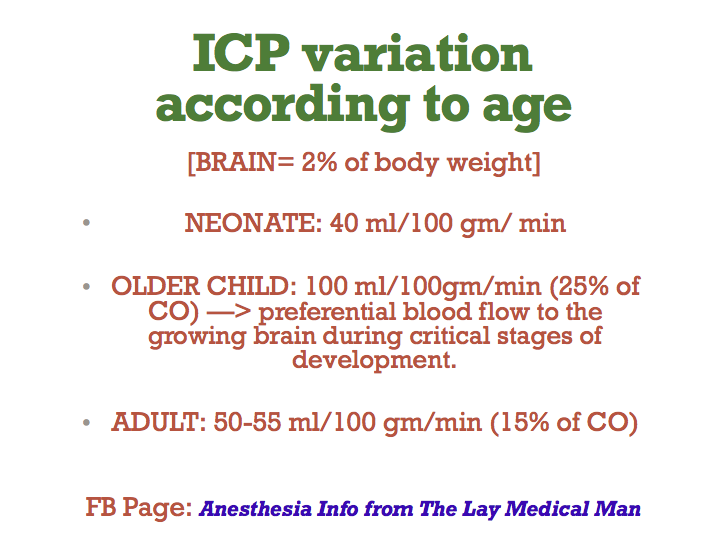
  • Cerebral Blood Flow is less in the neonate than the adult and autoregulation operates at less SBPs
  • In premature infants autoregulation is absent and perfusion is pressure dependent
  • Blood brain barrier is more permeable and hence the neonate is more sensitive to sedatives
  • Neonate responds to pain with tachycardia, hypertension, grimaces etc

Screen Shot 2019-08-24 at 12.17.29 pm

TEMPERATURE REGULATION

  • Higher thermoneutral temperature (temperature below which an individual is unable to maintain core body temperature) 32 degree C for a term infant compared with 28 for an adult.

  • Neonate loss heat very readily due to a high body surface area to weight ratio and absence of shivering in infants ❤ months
  • Produces heat by metabolism of brown fat (5-6% of body wt, stored around kidneys, scapula and mediastenum) by non shivering thermogenesis. Beta adrenergic mediated and contributes to significant amount of the O2 demand placed on the cardiorespiratory system. Ablated by beta blockade

RENAL SYSTEM

  • Immature at birth
  • Higher total body water (80%) at birth
  • Renal blood flow is 6% of cardiac output at birth rising to 18% of cardiac output at 1 month (compared with 20% in adult).
  • Reduced GFR, tubular function until 6–8 months of age
  • Reduced H+ ion excretion
  • Cannot tolerate both excessive water/ sodium load and dehydration (decresed ability to conserve water)
  • Fluids must be carefully balanced based on weight, insensible and observed fluid losses and maintenance requirements

HEPATIC SYSTEM

Low hepatic glycogen stores means hypoglycaemia occurs readily with prolonged fasting

DRUG ADMINISTRATION

  • TBW is increased: so the volume of distribution of water soluble drugs will increase and hence need an increase in the dose. e.g. Succinyl choline (1 mg/kg in adult but 2 mg/kg in the neonate)
  • Succinyl choline by acting on the SA node can produce arrhythmias and even asystole in the neonate
  • Though the neonate is more sensitive to nondepolarizing muscle relaxants, the higher ECF volume increases the required dose; so the final required dose remains unchanged
  • Immature hepatic and renal systems make the metabolism and excretion of the drugs slow. e.g. half life of morphine is increased due to the reduced ability to produce glucoronide conjugates
  • Circulating levels of albumin and alpha acid glycoprotein is less, increasing the free fraction and a pronounced effect
  • MAC is age related. MAC values for an infant are: • sevoflurane = 3.3% • isoflurane = 1.9% • desflurane = 9.4%.